
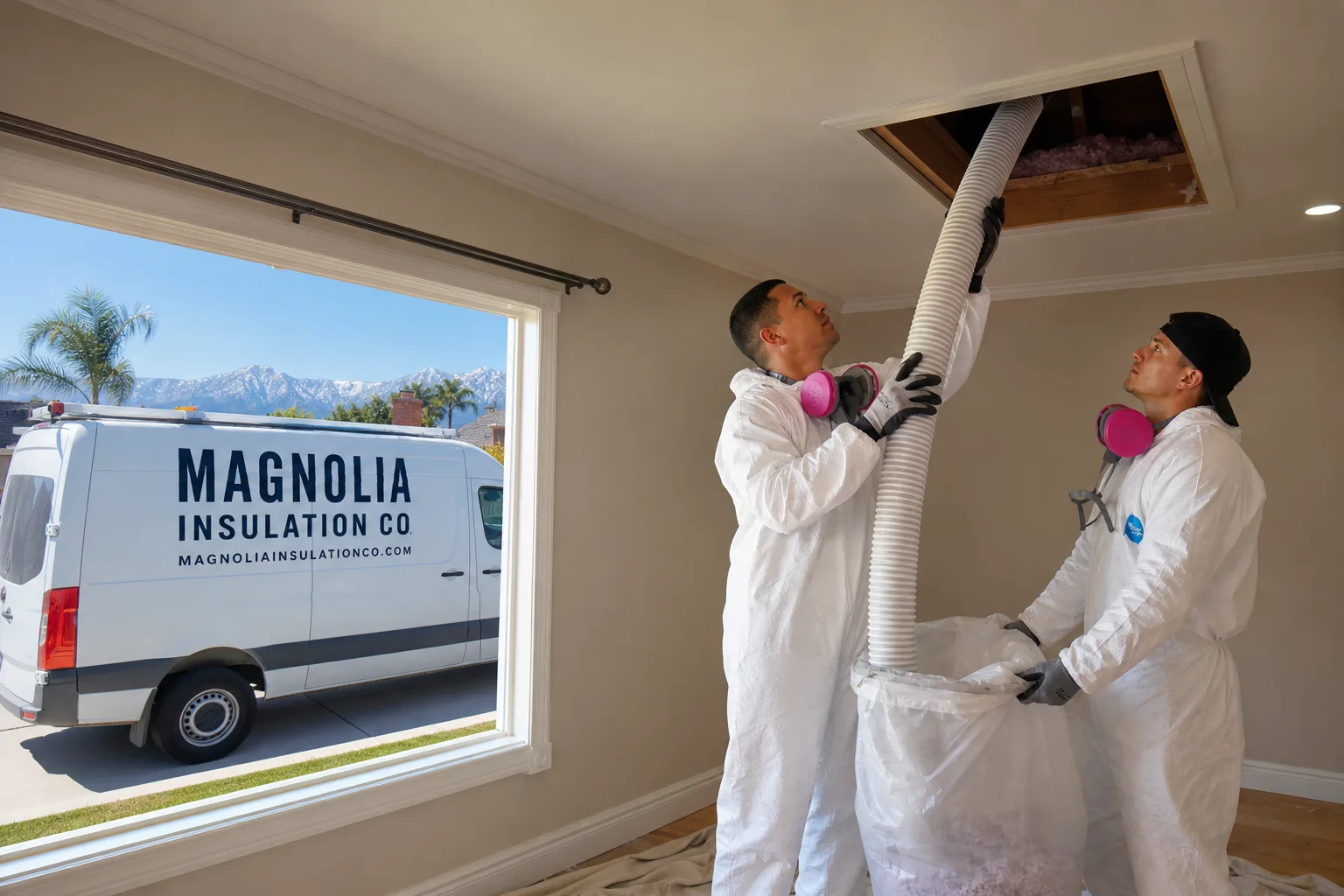
Fast, Reliable Spray Foam Insulation Across Highgrove
Spray foam insulation in Highgrove typically costs $2.40 to $6.10 per board foot installed, depending on whether you need open-cell or closed-cell foam, and most residential jobs run between $2,800 and $8,400 total. We’re in and out efficiently, usually completing attics or wall cavities in one to two days. If you’re dealing with rooms that won’t hold temperature through a Highgrove afternoon, call (866) 464-1714 and we’ll tell you straight what your envelope actually needs, not just what we want to sell you.
Highgrove’s housing stock demands a different conversation than neighboring cities. The citrus-era bungalows near the 92313 core were framed with unvented wood-cavity walls and unvented attics. The newer infill tracts went in with code-minimum insulation that underperforms in triple-digit heat. Neither responds well to a one-size-fits-all foam job. Our team at Spray Foam Insulation knows which application fits which structure, because we’ve opened enough walls in this town to see what’s actually behind them.
Why Magnolia Insulation Co Is Highgrove’s Preferred Spray Foam Insulation Company
We’ve earned our standing in Highgrove by being material-agnostic. We carry eight manufacturers: Owens Corning, Johns Manville, Knauf, Rockwool, CertainTeed, Icynene, Demilec, and GreenFiber. That means when we recommend closed-cell Icynene for a citrus-era wall cavity or open-cell Demilec for an attic deck, it’s because that’s the right material for the job, not because it’s the only one on the truck.
Our crews know the difference between a 1950s bungalow off Main Street and a 2018 infill home near the Colton border. That matters when you’re deciding whether to vent before you foam. We also know the city’s permit expectations and the practical realities of working in small attics with original framing. When a Highgrove homeowner calls us at (866) 464-1714, they get an answer based on building science, not a sales script.
Led by Glen Pacheco, our installers are state-licensed and insured, and we carry the full manufacturer training certifications for both Icynene and Demilec spray foam systems. You’ll see the same crew from first estimate to final walkthrough. That consistency shows up in how carefully we seal rim joists, how cleanly we cut foam around can lights, and how thoroughly we check venting before we ever pull a trigger.
Closed Cell Spray Foam Insulation in Highgrove
Closed Cell Spray Foam Insulation in Highgrove runs $3.80 to $6.10 per board foot installed, and for most homes here it’s the right call when you’re dealing with the extreme attic-to-living-space temperature differential that defines Highgrove summers. The foam cures rigid, adds structural strength to wood-framed walls, and creates an air barrier as well as a thermal barrier. That’s exactly what the older citrus-belt bungalows need, because their original framing was never designed with any cavity insulation at all.
Wall Cavity Retrofit for Older Homes
When we open a wall in a citrus-era Highgrove home, we usually find empty stud bays. Closed-cell foam fills those bays completely, bonds to the original wood framing, and stops air movement through the wall assembly. It also acts as a vapor barrier, which matters in a climate where the big threat is heat, not humidity.
Attic Deck Application and Venting
Closed-cell foam on the underside of a roof deck turns the attic into a conditioned space. But in Highgrove, doing that without first adding soffit intake venting is a known failure mode. Trapped heat above the foam can degrade it years before its rated life. We sequence venting first, foam second.
Open Cell Spray Foam in Highgrove
Open Cell Spray Foam in Highgrove costs $2.40 to $3.80 per board foot installed, and it’s often the better fit for attic decks where you want sound damping and air sealing without the vapor-barrier properties of closed-cell. Open-cell expands more, fills irregular cavities better, and weighs less against old ceiling joists. For Highgrove attics that already have workable ventilation, it’s a cost-effective way to cut the heat load blasting down through the ceiling.
Attic Ceiling and Sound Control
Open-cell foam on an attic floor or roofline noticeably quiets a house. In a denser Highgrove infill block, that matters. The foam seals the gaps around recessed lights, plumbing penetrations, and wire runs. It also doesn’t trap moisture in wall cavities the way closed-cell can if misapplied to the wrong assembly.
Rim Joist Sealing
Rim joists are where most Highgrove floor drafts come from. Open-cell foam seals the band board around the entire perimeter of a crawlspace or basement rim. It’s a smaller job, usually under $1,200, and it’s the single highest-payback air sealing move for older homes in the 92313 area.
Trusted Brands We Service in Highgrove
We install Icynene and Demilec spray foam systems, two of the most recognized open- and closed-cell platforms in North America. For homeowners who want a mineral wool alternative in Highgrove’s heat, we also carry Rockwool, which gives you fire resistance and sound damping beyond what fiberglass batts can provide. When a customer calls about their citrus-era home, we talk through which material fits the structure, the budget, and the performance they’re actually chasing. Eight brands, one recommendation.
Common Spray Foam Insulation Problems We See in Highgrove Homes
- Foam over an unvented attic deck: Citrus-era Highgrove homes rarely have soffit intake venting. Closed-cell foam applied directly over that trapped heat bakes from above, and the homeowner sees degraded performance within a few brutal summers.
- Closed-cell over original wood-framed cavities without drying potential: The old framing in Highgrove’s bungalows was never built to be a sealed assembly. Foam goes on, the wall can’t breathe, and the foam ends up working against the 1950s lumber instead of with it.
- Code-minimum insulation in newer infill: Highgrove’s newer tract homes met code on paper. But code-minimum fiberglass batts under a 100°F-plus attic differential leave second-story rooms sweltering. Spray foam added to one area only doesn’t fix the rest of the envelope.
- Foam around old single-pane window walls: We’ve opened citrus-era wall cavities behind original single-pane windows and found nothing but studs. Sealing those walls with foam helps, but if the windows stay, you’re still radiating heat through the glass.
Pricing for Spray Foam Insulation in Highgrove, CA
Here are straight numbers for Highgrove’s market. A typical rim joist job runs $900 to $1,400. An open-cell attic deck on an 1,100-square-foot bungalow runs $2,800 to $4,200. Closed-cell wall cavity retrofit for the same home runs $4,500 to $7,200. A full closed-cell attic deck plus wall cavities can hit $8,400 on older homes with deep framing. What moves the price: access, how much old insulation has to come out first, whether you need venting work, and how irregular the framing is. Estimates are free, and we give you a written range before you commit. Call (866) 464-1714 and we’ll walk the house with you.
We Also Serve Cities Near Highgrove
Our crews cover Highgrove and the surrounding communities, including Grand Terrace, Colton, Loma Linda, and Rubidoux. If you’re just over the line in any of those cities, the same team, same brands, and same vent-first approach applies.
Serving Highgrove, CA — Our Local Coverage Area
We’re based in the Highgrove area and know this community well. Use the map below to see our service coverage — if you’re nearby, we can almost certainly help.
FAQs About Spray Foam Insulation in Highgrove
Yes, in most cases it does. Highgrove’s citrus-era homes were built with unvented attics, and spraying foam onto an unvented attic deck traps heat above the foam, which shortens its effective life. We address soffit intake venting before we foam the deck so the assembly works the way it should. Call (866) 464-1714 and we’ll check what your attic actually has before we sell you anything.
Closed-cell foam works in original wood-framed walls, provided the wall assembly can still dry to at least one side. In Highgrove’s low-humidity climate, that’s usually achievable. We inspect the framing and exterior finish before recommending closed-cell, because applying it to the wrong assembly can trap moisture against the old lumber. Call (866) 464-1714 for a wall cavity assessment.
Spray foam is often worth it in Highgrove’s newer infill homes, especially for attic decks and rim joists where code-minimum batts leave the biggest gaps. The extreme attic-to-living differential in Highgrove summers overwhelms code-minimum insulation, and foam air-seals the assembly in a way batts never will. Call (866) 464-1714 and we’ll tell you where the payback is real and where it isn’t.
For Highgrove’s heat, closed-cell usually wins in wall cavities and unvented attic decks because it adds structural strength and acts as a vapor barrier. Open-cell is a better value for vented attics and sound control, and it costs about 40% less per board foot. The right answer depends on your specific framing and venting.
Spray foam will not fix single-pane windows. It seals the wall cavity around them, which helps, but the glass itself still radiates heat in and out. You’ll see the best results when foam is paired with window replacement or at least window treatments. We’ll be honest about what the foam can and can’t do before you spend a dollar.
Contact Magnolia Insulation Co for Highgrove Spray Foam
If your Highgrove home is losing the fight against inland heat, call us at (866) 464-1714 for a free estimate. We’ll inspect your attic venting, look inside a wall cavity if needed, and tell you exactly which foam, if any, belongs in your house. Glen Pacheco leads a team that stands behind the work, and we’d rather talk you out of the wrong product than sell it to you.
Written by Glen Pacheco, Owner at Magnolia Insulation Co, serving Highgrove and the Inland Empire with spray foam, attic, and blown-in insulation.