Open Cell Spray Foam in El Monte
Open Cell Spray Foam in El Monte is what we recommend for most attic roofline applications and interior wall retrofits, especially in the 1950s-60s stucco homes that dominate the San Gabriel Valley flats. It’s a lighter-density foam that expands significantly on application, filling irregular cavities and sealing air leaks in one pass. For El Monte homeowners, it’s the go-to choice for unvented attic conversions and sound-dampening interior walls. Expect to pay between $2,100 and $4,800 for a typical 1,200-1,400 sq ft home, depending on depth and whether we’re treating the attic roofline, interior walls, or both.
Attic Roofline Retrofit
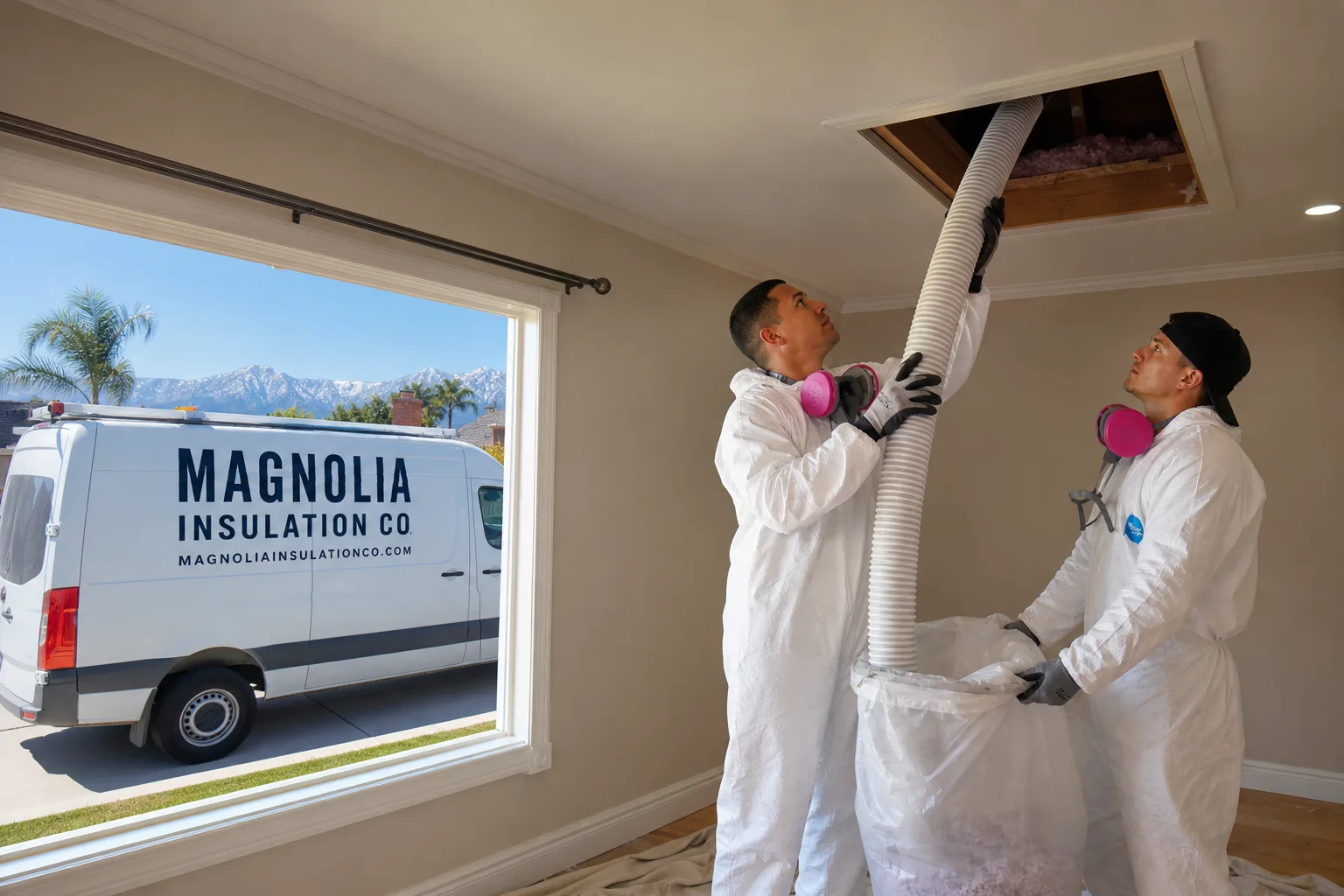
El Monte’s low-pitch composition roofs leave attic temperatures hitting 140-150°F by mid-afternoon in July. Open-cell foam applied directly to the underside of the roof deck brings the attic into the conditioned envelope, which is the single most effective fix for the classic El Monte problem: a scorching rear bedroom that never cools down no matter how long the AC runs. The foam’s air-sealing properties close the gaps around top plates, recessed cans, and wiring penetrations that let hot air migrate into living spaces.
Interior Wall Cavity Fill
The 1958 tract homes in 91731 and 91732 often have empty wall cavities or a dusting of mineral wool that settled decades ago. Open-cell foam injected into those cavities fills the space completely and seals the air leaks that old batts never addressed. We’ve done this work on streets south of Valley Boulevard and throughout the neighborhoods around Mountain View High School, and the difference in noise transfer and draftiness is immediate.
Spray Foam Insulation Contractors in El Monte
Spray Foam Insulation Contractors in El Monte need to understand mid-century framing before they spray anything. Our crew has worked in enough of these post-war ranch homes to know exactly what hides behind stucco: 2×4 framing, black paper, and in many cases, absolutely nothing. We don’t show up with a one-material playbook. We show up with Icynene and Demilec open- and closed-cell systems, and we recommend based on what your specific house needs, not what’s on the truck.
Retrofit Diagnosis First
Before we spray, we walk the attic, check the vents, and look at how the house breathes. El Monte’s older homes weren’t built for modern cooling loads. The framing is sound, but the envelope leaks. Our job is to find where. That diagnostic step is why our recommendations hold up ten years later, and why we’ll sometimes tell a homeowner to fix ventilation before adding foam.
Material-Agnostic Honesty
Because we install both open- and closed-cell spray foam, we’re not married to one recommendation. A garage ceiling over an unconditioned space calls for a different product than a roof deck under a low-slope roof in the 91734 ZIP. Our recommendation depends on your framing, your roof, and what you’re trying to solve. That’s the whole point of Spray Foam Insulation done right.
Why Magnolia Insulation Co Is El Monte’s Preferred Spray Foam Insulation Company
Glen Pacheco built Magnolia Insulation Co to be the kind of specialist he’d want in his own home. That means showing up on time, looking at the actual problem, and recommending the material that fits the house, not the one that’s easiest to sell. El Monte homeowners call us after years of fighting hot bedrooms and high summer bills, and they usually tell us the same thing: nobody ever explained why their house overheats. We do.
We work in El Monte every week. The drive from our Rancho Cucamonga shop to the 91731, 91732, 91734, and 91735 ZIP codes is one we know well, and we schedule with that in mind. When you call for a free estimate, we’ll give you a window and keep it. Our reviews from El Monte customers consistently mention the same things: we listened, we explained the options, and we didn’t push what they didn’t need.
The homes here present a specific set of problems. Settled mineral wool, unvented attics, garage conversions with no insulation at all. We’ve diagnosed enough of them to know what we’re walking into before we knock on the door. That local experience means faster jobs and fewer surprises.
Fast, Reliable Spray Foam Insulation Across El Monte
If you own a home in El Monte built between 1950 and 1975, you’re probably paying more to cool it than you should. The original insulation, if there was any, has settled or was never adequate for the 90-100°F summers we get here in the San Gabriel Valley. Spray foam insulation in El Monte typically costs $2,100 to $9,500 depending on scope, and our team can usually start within one to two weeks of your estimate. Call (866) 464-1714 and we’ll walk your attic with you, show you what we’re seeing, and give you a straight answer.
Trusted Brands We Service in El Monte
Magnolia Insulation Co is an authorized installer for eight nationally recognized insulation manufacturers, so we’re not limited to whatever one brand happens to make. For El Monte’s mid-century homes, we work frequently with Icynene open-cell and closed-cell spray foam, Demilec closed-cell for moisture-heavy areas like rim joists and garage ceilings, and CertainTeed for supplemental batt work in certain applications. No matter which material your home needs, the product is ordered for your job and arrives when we do. We don’t stockpile a single brand and force it into every attic in the 91732 ZIP. That’s not how a specialist works.
Common Spray Foam Insulation Problems We See in El Monte Homes
- Unvented attics trapping heat: Many 1950s-60s El Monte homes have undersized gable vents and no ridge vent. If spray foam is applied to the roofline without fixing the ventilation, the attic still bakes and shingle temperatures climb. The foam is only half the solution.
- Foam over settled mineral wool: Some older homes have original mineral wool that’s compressed to an inch thick in the wall cavities. Spraying over it without removing or addressing the settling leaves air gaps and uneven coverage. The cavities need to be evaluated first.
- Closed-cell foam with moisture problems: Closed-cell spray foam is a vapor barrier. In an older stucco home with existing moisture issues, using it in the wrong place can trap water against the framing and the stucco. In El Monte’s dry climate, this is less of an issue than in coastal cities, but it still matters on the north and east walls.
- Garage conversions with no insulation at all: A lot of El Monte homes have attached garages that were converted to living space decades ago, often with zero insulation in the walls or ceiling. Adding open-cell foam to the garage ceiling and surrounding walls makes those rooms usable in August without running a separate AC unit all day.
Pricing for Spray Foam Insulation in El Monte, CA
| Application | Typical Range |
|---|---|
| Open-cell attic roofline (1,200 sq ft home) | $2,800 – $4,800 |
| Closed-cell rim joist sealing | $700 – $1,800 |
| Garage ceiling spray foam | $900 – $2,200 |
| Interior wall cavity retrofit (per room) | $600 – $1,400 |
The biggest cost driver in El Monte is access. Low-pitch roofs mean tight attic spaces, and some of the older homes have original insulation that needs removal before we spray. The numbers above reflect what we’ve quoted across the 91731 through 91735 ZIP codes in the last year. Every estimate is free and line-itemed, so you see exactly what you’re paying for. Call (866) 464-1714 to schedule yours.
We Also Serve Cities Near El Monte
Our team covers the full San Gabriel Valley, including South El Monte, North El Monte, Temple City, and Rosemead. If you’re in any of these nearby communities or elsewhere around El Monte, we’ll come out, inspect your attic and walls, and give you the same straight recommendation we’d give our own family.
Serving El Monte, CA — Our Local Coverage Area
We’re based in the El Monte area and know this community well. Use the map below to see our service coverage — if you’re nearby, we can almost certainly help.
FAQs About Spray Foam Insulation in El Monte
Yes, in most cases it will, but only if we address the attic ventilation at the same time. El Monte’s hottest rooms are almost always on the south or west side, under an attic that hits 140°F by 3 p.m. in July. Air-sealing the top plates and applying open-cell foam to the attic roofline removes the radiant-heat load that’s cooking the ceiling. We’ve seen a 12°F drop in a single August day in the 91732 ZIP. Call (866) 464-1714 for an exact quote on your home.
No, we don’t recommend it. Old mineral wool that’s settled to a fraction of its original depth creates uneven surfaces and air gaps that the foam can’t correct. We remove the old material first, inspect the wall cavities, and then spray clean. Skipping that step is how you end up with a drafty house and a foam bill that didn’t solve anything.
Yes, in most cases the City of El Monte requires a building permit for insulation work that changes the thermal envelope of your home. We handle the permit paperwork as part of our job, and we’ll confirm the specific requirements for your property and ZIP code before we schedule. It’s a manageable process, but it’s not one you want to skip.
For attic rooflines in El Monte, open-cell spray foam is usually the right choice. It’s an excellent air seal and provides strong thermal performance for a cooling-dominant climate. Closed-cell foam makes more sense at rim joists, garage ceilings, and anywhere moisture control matters. The right answer depends on your house, and that’s exactly what our inspection is for.
Fiberglass batts in an El Monte wall cavity from the 1960s leave air gaps. Spray foam fills the entire cavity and air-seals at the same time, which matters more in these older homes than the R-value number alone suggests. The difference is a house that stops leaking cooled air through the walls. For most retrofit scenarios here, foam is the better fit. Estimates are free, so call (866) 464-1714.
Written by Glen Pacheco, Owner at Magnolia Insulation Co, serving El Monte and the San Gabriel Valley.