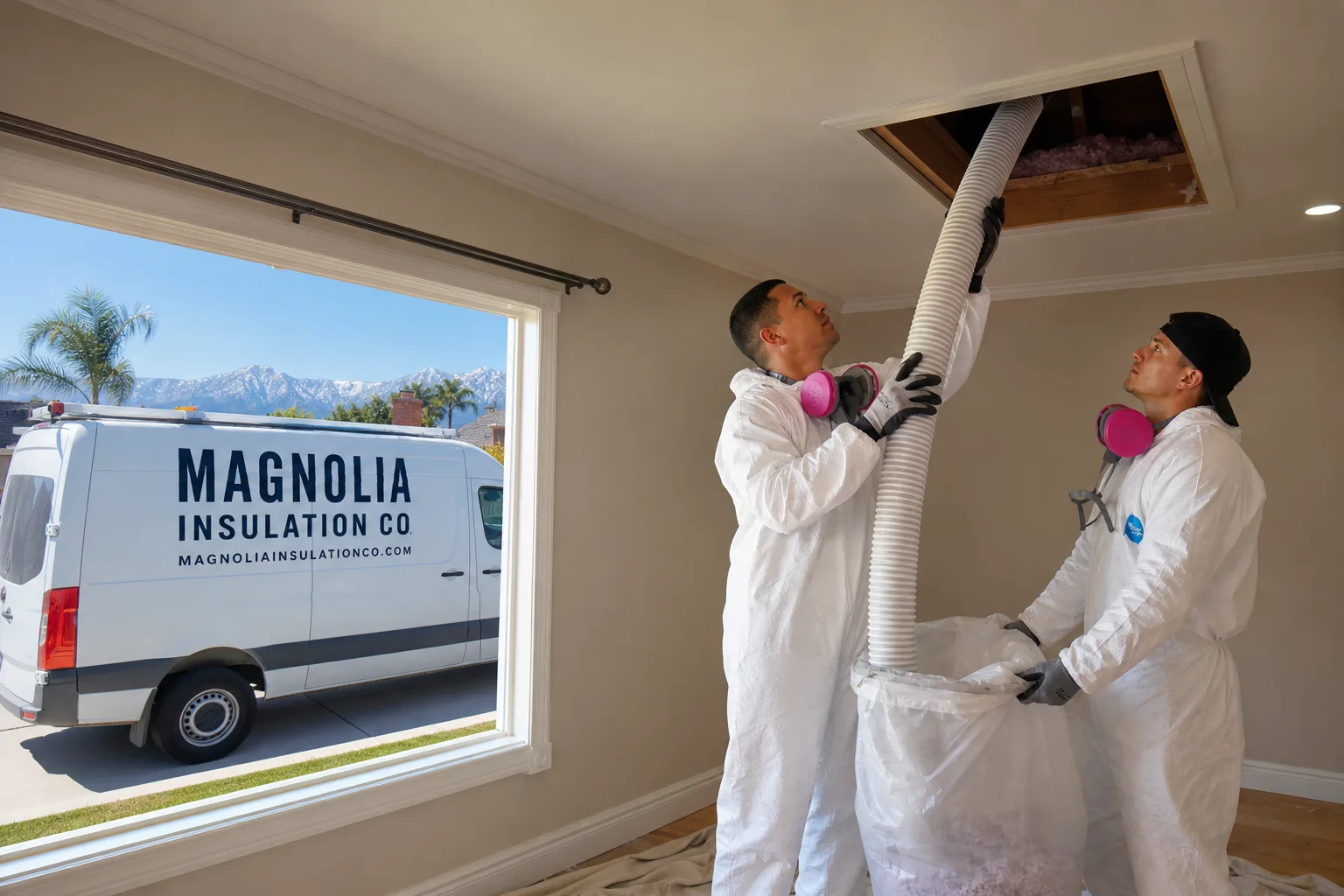
Fast, Reliable Attic Insulation Across Mayflower Village
Attic insulation in Mayflower Village typically costs between $1,800 and $4,200 for a full retrofit on a 1,200-square-foot ranch home, with most jobs completed in one day. Homes here, mostly 1950s and 1960s single-story builds, carry original R-11 or R-19 batts that have settled, flattened, and stopped doing their job. Our crews know these houses, know the unvented attics and the knob-and-tube wiring that comes with them, and we’re usually in your neighborhood within 24 to 48 hours of your call. If you’re tired of the upstairs bedroom feeling ten degrees hotter than the rest of the house during a Santa Ana heat wave, call us at (866) 464-1714 and we’ll diagnose what’s actually going on up there.
Why Magnolia Insulation Co Is Mayflower Village’s Preferred Attic Insulation Company
Mayflower Village sits at the base of the San Gabriel Mountains, where summer heat waves slam into wood-frame ranches that were never designed for triple-digit temperatures. Our Attic Insulation team has worked through enough attics in the 91006 zip code to recognize the patterns: compressed fiberglass batts over living rooms, unvented eaves trapping heat, and insulation pulled away from soffits by decades of Santa Ana winds finding their way in. Homeowners call us because we explain what we’re seeing in plain English, not sales language. Glen Pacheco leads our crews, and the standard he sets is simple: figure out what the house actually needs before recommending anything.
We carry eight nationally recognized insulation brands, including Rockwool, CertainTeed, Icynene, and Demilec, so we’re not pushing a single product line, and we also offer Reflectix service in Mayflower Village for radiant barrier needs. A 1958 ranch off Starlight Drive with original framing gets a different recommendation than a later infill build near the eastern edge of town. That’s the point. No two Mayflower Village homes are identical, and pretending otherwise is how attics end up with mold problems six months after the job.
Response time matters when your attic is baking at 130°F and your air conditioner can’t keep up. We schedule Mayflower Village jobs with local traffic patterns in mind, coming in from the west side via Huntington Drive or up from the 210, so we arrive when we say we will. Estimates are free, and we’ll walk you through what we find before you commit to anything.
Radiant Barrier in Mayflower Village
A Radiant Barrier in Mayflower Village homes works by reflecting radiant heat away from the living space instead of trying to absorb and slow it like batt insulation. When your roof deck hits 140°F during a July heat wave, that heat radiates down into the attic and then through the ceiling. A properly installed radiant barrier stapled to the underside of the roof rafters can block a significant portion of that transfer. For most single-story ranches here, adding a radiant barrier alongside insulation upgrades runs $900 to $1,800 depending on attic footprint and accessibility.
Why This Works in Foothill Heat
Mayflower Village doesn’t just get hot. It gets hot and dry, with intense solar radiation reflecting off the nearby San Gabriel foothills. Radiant barriers perform best in exactly these conditions: large temperature differentials between the roof deck and the living space below. When the overnight low drops into the 30s in winter, the same barrier helps keep heat from escaping upward, making it a year-round performer in this specific climate.
What Installation Actually Involves
Our crew staples perforated radiant barrier foil along the rafters, leaving the ridge and soffit vents open so air still moves through the attic. In older Mayflower Village homes with low-pitch roofs and tight access, we may need to work around existing framing, wiring, and the occasional wasp nest. That’s not a complication; it’s just what working in houses of this era looks like.
Attic Cleaning Services in Mayflower Village
Attic Cleaning Services in Mayflower Village homes matter because decades of dust, rodent activity, and degraded insulation don’t just look bad, they reduce the performance of whatever insulation sits underneath. In these foothill neighborhoods, dry conditions plus mature trees mean fine dust and droppings accumulate faster than homeowners expect. A full attic cleaning before a new insulation install runs $400 to $1,100 for a typical 1,000- to 1,400-square-foot attic, and it’s the smartest prep step you can take.
What We Remove and Why
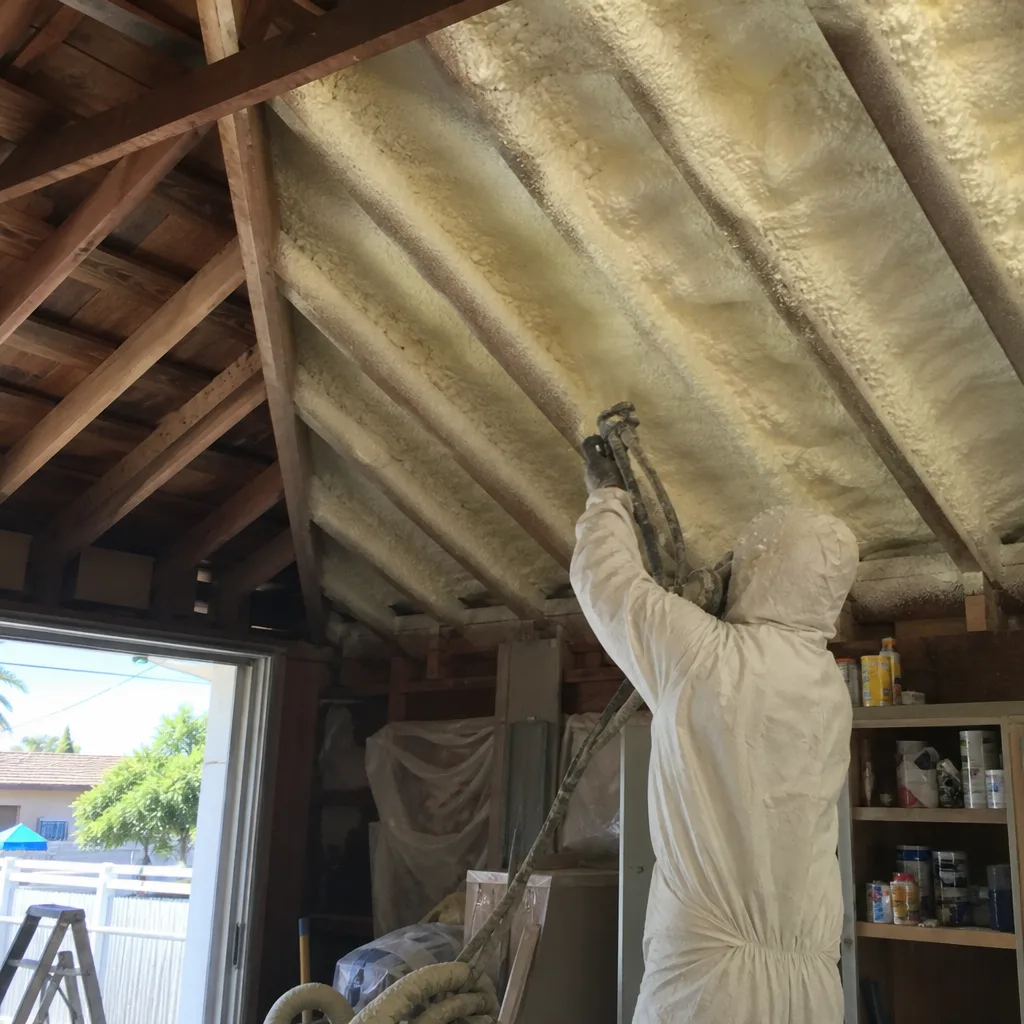
We haul out old, compressed insulation, vacuum up dust and pest debris, and sanitize surfaces before anything new goes in. In homes along the northern edge of Mayflower Village closer to the foothills, we regularly find rodent entry points around eave gaps that need sealing first. Skipping this step means blowing new insulation over contaminated material, and that’s a building-science failure we won’t sign off on.
Checking for Air Leaks and Wiring Hazards
While the attic is open, we inspect around recessed lights, attic hatches, and plumbing penetrations for air leaks that bypass insulation entirely. In 1950s ranches, this is also when we identify knob-and-tube wiring that must be addressed before any insulation installation. Glen Pacheco has walked enough Mayflower Village attics to know what to look for, and the cleaning phase is where problems get found before they become expensive surprises.
What happens when you call
- 1
A real person answersNo phone trees — you reach a local pro.
- 2
You get an upfront price rangeHonest numbers before anyone is dispatched.
- 3
A background-checked tech heads outLicensed & insured, dispatched right away.
- 4
You approve before work beginsNothing starts until you say go.
Trusted Brands We Service in Mayflower Village
We’re an authorized installer for Owens Corning, Johns Manville, Knauf, Rockwool, CertainTeed, Icynene, Demilec, and GreenFiber, which means the brand conversation starts with your house, not our warehouse. For a Mayflower Village ranch with a low-slope roof and decades of temperature swings, we might recommend Rockwool batts for their fire resistance and sound damping. For a homeowner focused on sustainability, GreenFiber cellulose made from recycled paper might be the call. We stock the products we install, so scheduling turnaround for Mayflower Village jobs stays tight, and we’re not waiting on a distributor before we can start your project.
Common Attic Insulation Problems We See in Mayflower Village Homes
- Compressed or displaced original R-11 batts in unvented attics. A 1959 minimal-traditional build often has fiberglass that’s been walked on, shifted, or flattened to half its original thickness. During Santa Ana winds, static pressure differences pull conditioned air through the ceiling, creating hot spots and condensation in exactly the wrong places.
- Knob-and-tube wiring buried under new insulation without clearance. We find this in at least a third of the older Mayflower Village ranches we inspect. The ceramic knobs get hot under load, and insulation packed around them creates a fire hazard that’s completely avoidable with proper clearance and junction work.
- Inadequate eave or ridge venting that traps moisture when new insulation is added. Many of these homes were built with minimal venting because the original builders expected attics to stay hot and dry. Adding dense insulation without fixing ventilation first turns the attic into a moisture trap, and the San Gabriel Valley’s temperature swings make the condensation cycle worse.
- Settled, pest-damaged, or displaced insulation around attic hatches and recessed lights. Squirrels and roof rats from the foothill chaparral get into attics through eave gaps and treat insulation like bedding. Around older recessed light fixtures, disturbed insulation breaks the air seal and undermines the entire R-value of the attic floor.
Pricing for Attic Insulation in Mayflower Village, CA
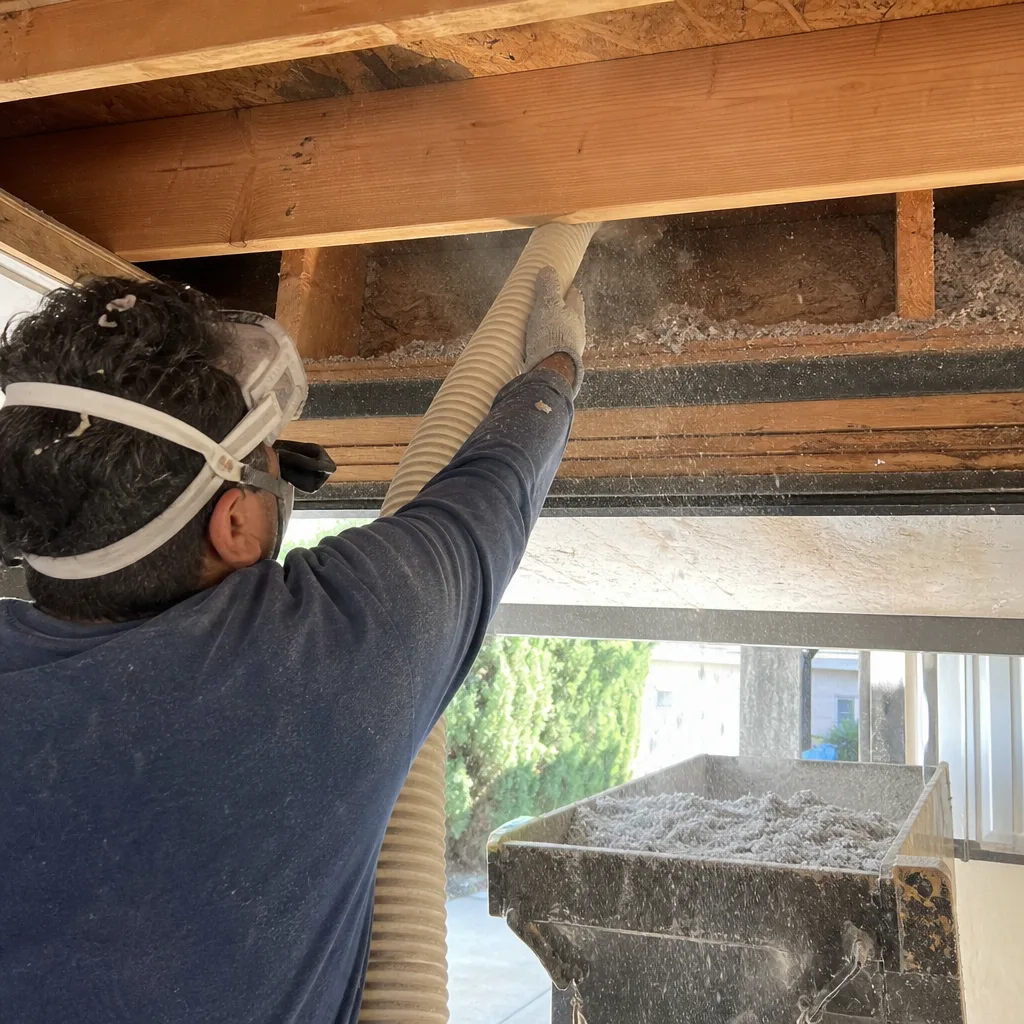
A full attic insulation replacement on a typical 1,200-square-foot Mayflower Village ranch runs $1,800 to $4,200, depending on the material we agree on and the condition of the existing attic. Blown-in fiberglass to R-38 lands in the $1,800 to $2,600 range for most homes here. Rockwool batts run higher, typically $2,800 to $4,200, but carry real fire-resistance and sound-damping benefits that matter in wood-frame construction. Radiant barrier add-ons run $900 to $1,800. Attic cleaning before any installation runs $400 to $1,100. What moves a job toward the top of these ranges: attic access difficulty, knob-and-tube remediation, or ventilation corrections. We quote these jobs free of charge, and we’ll show you what we’re seeing before you sign anything. Call (866) 464-1714 for a number specific to your house.
What Sets Mayflower Village Apart for Insulation Work
Mayflower Village is an unincorporated foothill community where the housing stock is a mix of post-WWII ranch homes and later infill, and the combination of intense San Gabriel Valley summer heat and nearby wildfire risk makes insulation a year-round energy and safety concern, not just a winter comfort upgrade. Most homes are 1950s and 1960s single-story ranches with wood-frame construction, often running original or minimally upgraded attic insulation at R-11 to R-19, with some older knob-and-tube wiring still in place that must be handled carefully during any retrofit. The wildfire risk from the foothills adds another layer: homes with well-insulated attics and sealed envelopes resist ember intrusion better, and a properly ventilated attic helps prevent the superheated air buildup that can accelerate fire spread in wood-frame structures.
Most Mayflower Village homes are 1950s-1960s ranches with unvented or barely vented attics, so any insulation upgrade must first correct ventilation or risk trapping moisture that leads to mold, a step often skipped in neighboring foothill cities with newer housing stock. On a 1958 ranch off Starlight Drive in Mayflower Village, our crew found R-11 batt insulation compressed under years of dust and a single unvented eave. After installing proper ridge and soffit vents, we blew in Owens Corning R-38 fiberglass, sealing old knob-and-tube junctions with care, and the homeowner immediately noticed a 10°F drop in attic temperature during a 100°F heat wave. That’s the ventilation-first approach this community’s housing stock demands, and it’s the main reason we don’t just show up and start blowing insulation into an attic that isn’t ready for it.
For homeowners across Mayflower Village and nearby foothill communities, we bring the same material-agnostic approach: eight brands, one recommendation, based on what your specific house actually needs.
We Also Serve Cities Near Mayflower Village
Our service area extends beyond Mayflower Village into the surrounding San Gabriel Valley. We work regularly in Attic Insulation in Mayflower Village and the neighboring communities of Arcadia, Monrovia, Sierra Madre, and North El Monte. If you’re in one of those cities and dealing with the same foothill heat and aging housing stock, the same crew, the same standards, and the same free estimates apply.
Serving Mayflower Village, CA — Our Local Coverage Area
We’re based in the Mayflower Village area and know this community well. Use the map below to see our service coverage — if you’re nearby, we can almost certainly help.
FAQs About Attic Insulation in Mayflower Village
Your 1950s or 1960s ranch was likely built with minimal eave and ridge venting because the original builders didn’t anticipate the insulation levels we need today. Adding dense insulation to an unvented attic traps moisture that condenses when cold winter nights follow hot Santa Ana days, and that leads to mold on the underside of the roof deck. The fix is straightforward: install proper ridge and soffit vents first, then blow in the insulation. It adds a few hundred dollars to the job and prevents a much more expensive mold remediation later. Call (866) 464-1714 if you want us to inspect your attic’s venting before you spend money on insulation.
No, you cannot safely insulate over live knob-and-tube wiring. The ceramic knobs and tubes get warm under load, and insulation packed around them prevents heat dissipation, creating a fire hazard. The wiring must either be decommissioned and replaced with modern Romex before insulation goes in, or proper clearance maintained around all active runs. We inspect for this in every older Mayflower Village home before we start, and we’ll tell you exactly what you’re dealing with. This is a common situation in 91006, and a competent insulation crew will flag it every time, not bury it and hope for the best.
For Mayflower Village’s climate zone, R-38 to R-49 in the attic is the right target, which is two to three times what most of these homes currently have. R-38 is sufficient for most ranches here when paired with proper ventilation and air sealing. If you have the attic depth and budget, R-49 gives you more headroom against those 100°F+ heat waves and drops into the 30s on winter nights. The material matters too: blown-in fiberglass and cellulose both hit R-38 easily, while Rockwool batts offer additional fire resistance that’s worth considering given the foothill wildfire exposure.
Yes, for most homes here, a radiant barrier is one of the most cost-effective upgrades you can make because Mayflower Village gets intense direct solar radiation against roof decks that hit 130°F to 140°F in summer. Radiant barriers work by reflecting that heat before it radiates into the attic and through your ceiling. They perform best in hot, sunny climates with significant temperature swings, which describes this exact location. The payback is fastest if your attic currently has minimal insulation, because the barrier handles the radiant load while the insulation handles the conductive load.
Attic cleaning in older Mayflower Village homes involves removing all existing insulation, vacuuming up dust and rodent droppings, sanitizing surfaces, sealing entry points, and inspecting for wiring hazards and air leaks before any new insulation goes in. In homes near the foothill edge, rodent activity is common, and cleaning is the only way to ensure you’re not blowing new insulation over contaminated material. The process takes a few hours on a typical 1,000-to-1,400-square-foot attic and runs $400 to $1,100. It’s the step that makes or breaks the long-term performance of whatever insulation you install next.
Written by Glen Pacheco, Owner at Magnolia Insulation Co, serving Mayflower Village and the San Gabriel Valley.