Fast, Reliable Attic Insulation Across March Air Force Base
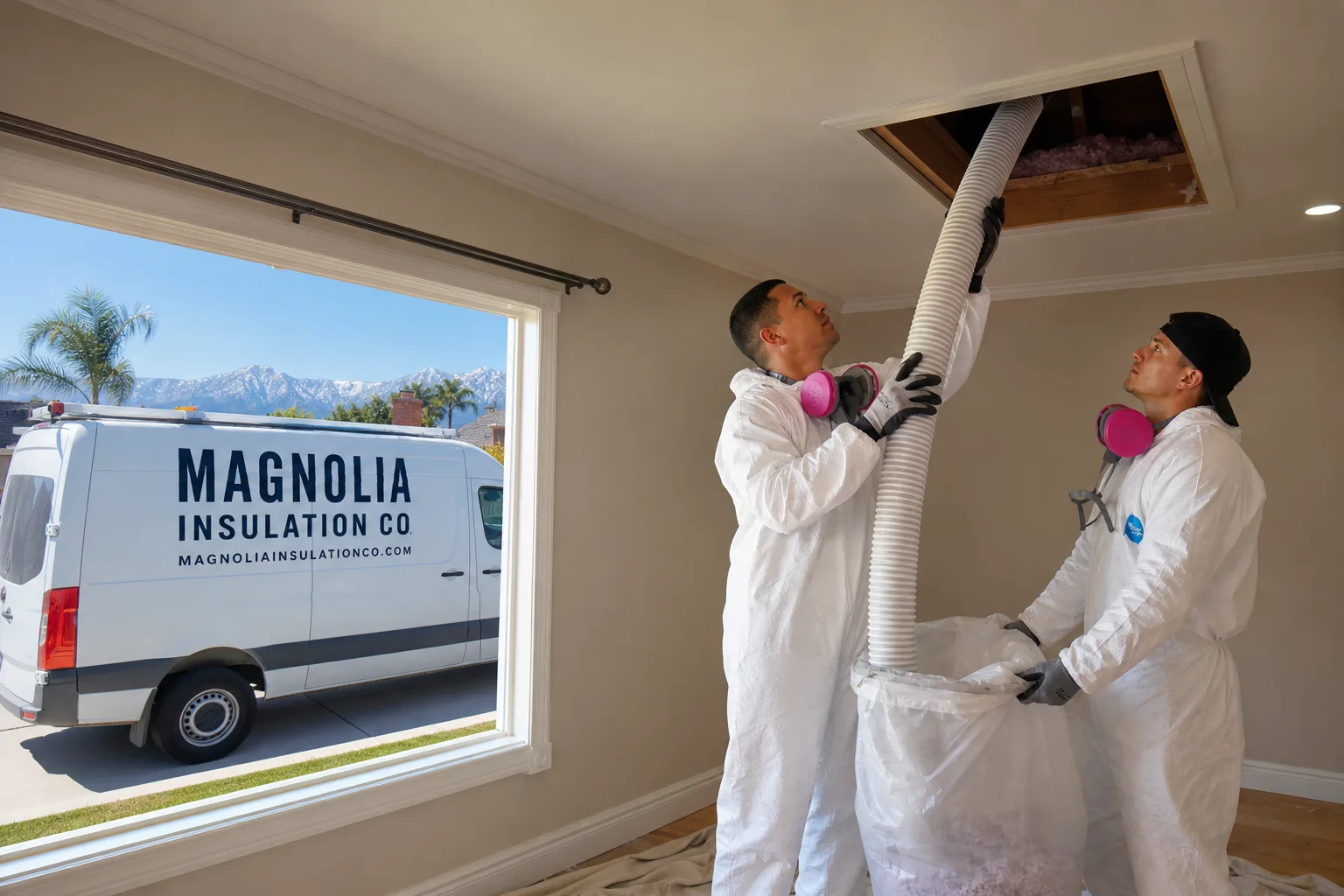
Attic insulation in March Air Force Base is not a cosmetic upgrade. It is the single biggest lever you have on summer cooling costs when your attic hits 140°F and your ducts are sweating through their joints. Homes in the 92551 ZIP, especially the mid-century military-family housing near the base, lose a staggering share of conditioned air before it ever reaches a bedroom register. We respond to March Air Force Base calls fast, usually with same-week scheduling and often same-day for emergency assessments. If your upstairs runs 10 degrees warmer than your thermostat says, call (866) 464-1714 and we’ll tell you exactly what’s happening in your attic.
Why Magnolia Insulation Co Is March Air Force Base’s Preferred Attic Insulation Company
We know the difference between a Moreno Valley tract home and a 1950s base-adjacent house in March Air Force Base. That distinction matters. The original insulation in those March-area homes was never designed for the inland heat load we now get every July and August. Homeowners around the base call us because our team climbs into attics off Cactus Avenue and Riverside Drive and comes out with a straight answer, not a pitch. We carry eight brands precisely because no single product solves every March Air Force Base attic. Owens Corning batts work well in one cavity. GreenFiber cellulose makes more sense in another. Demilec spray foam is the right call for a duct-heavy retrofit. That breadth means our recommendation fits your home, not our inventory.
Glen Pacheco, who leads our crews, has spent years diagnosing attic failures in older Riverside County housing stock. The recurring theme in March Air Force Base homes? Legacy insulation that has settled to half its original R-value, paired with duct runs that were never sealed properly. When we say we know your house, we mean the specific age, framing, and attic geometry of 92551 housing. That local familiarity shortens the diagnosis and keeps the fix scoped to what actually matters.
Attic Ventilation in March Air Force Base
Attic Ventilation in March Air Force Base is not optional if you want your insulation to do its job. A properly vented attic moves the superheated air out of the roof cavity before it can radiate down through your ceiling. In March Air Force Base, where summer attic temperatures routinely exceed 140°F, inadequate ventilation can push that heat through even R-38 insulation and into your living space. We size and install intake and exhaust ventilation to match your attic’s cubic footage, roof pitch, and existing framing. A typical vent upgrade in March Air Force Base, including new soffit or gable vents and any necessary baffles, runs $450 to $1,200 depending on attic size and how many existing vents you have.
Baffle Installation and Airflow Correction
Older March-area homes often have insulation pushed tight against the roof sheathing, choking the soffit vents. We install baffles to keep a clear airflow channel from the eaves to the ridge or gable vents. This is a small job, usually $150 to $400, but it prevents the heat trap that shortens insulation life.
Whole-Attic Ventilation Retrofits
When a March Air Force Base homeowner replaces blown-in insulation, we always check the ventilation first. Adding a ridge vent or powered attic fan alongside new insulation can cut attic temperature by 20 to 30 degrees. That reduces the cooling load on your AC and keeps the attic floor, and the insulation on it, working at design temperature.
Radiant Barrier in March Air Force Base
Radiant Barrier in March Air Force Base works differently than insulation. Insulation slows conductive heat transfer. A radiant barrier reflects radiant heat before it enters the insulation layer. In March Air Force Base’s hot, dry inland climate, radiant heat is the dominant summer load. A properly installed radiant barrier under the roof deck can reflect 90% or more of that gain, dropping attic temperatures by up to 30°F on the worst days. That means your existing attic insulation works less hard and your duct runs sit in a cooler attic, so they leak less cooled air. Radiant barrier installation in a typical March Air Force Base ranch or military-family home runs $1,100 to $2,800 depending on attic square footage and whether we staple it to the rafters or lay it over existing insulation.
Retrofit Radiant Barriers for Older Homes
Mid-century houses near the base have low-slope or gable roofs that leave little room for thick insulation near the eaves. A perforated radiant barrier stapled to the rafter bottoms gives those tight cavities a thermal break without compressing the batts below. It is one of the most cost-effective upgrades we do for 92551 homes with limited attic depth.
Pairing Radiant Barrier with Duct Sealing
Radiant barrier alone cannot fix a duct leak. But when we lower the ambient attic temperature, the sealed ducts and insulation all perform measurably better. In March Air Force Base homes with original duct runs, we recommend the barrier after air-sealing and duct wrap. The combined effect is what moves the needle on your SCE bill, not any single material.
Trusted Brands We Service in March Air Force Base
Magnolia Insulation Co installs materials from eight nationally recognized manufacturers, and we keep our March Air Force Base work on schedule by stocking the most requested products locally. For attic retrofits in 92551, we lean on CertainTeed batts for their consistent density and fit in older framing, GreenFiber cellulose for blown-in applications where recycled content and thermal tightness are priorities, and Icynene or Demilec spray foam when a sealed attic or duct-heavy retrofit demands air-barrier performance. We do not carry every brand just to say we do. We carry them because March Air Force Base attics vary wildly from one street to the next, and a Cactus Avenue ranch needs a different material than a two-story near the base’s northeast edge. Fast turnaround on parts and materials means your project does not stall while we wait on a distributor in Ontario or San Bernardino.
Common Attic Insulation Problems We See in March Air Force Base Homes
- Compressed legacy insulation in mid-century housing. The original batts in 1950s and 1960s base housing settle and compress over decades. We regularly measure these attics at R-7 to R-11 when they should be R-38 or higher. Compression kills the dead air space that makes insulation work, and March Air Force Base summers expose that weakness every afternoon.
- Unsealed and disconnected duct joints in unconditioned attics. In 92551 homes with original duct runs, joints come loose over time and leak cooled air into a 140°F attic. A disconnected return duct in a March-area attic can pull superheated air straight into your AC system. Duct sealing belongs in every March Air Force Base insulation scope.
- Inadequate attic ventilation trapping heat. Many older homes near the base have only a few static vents. That trapped heat raises attic temperature past the limit that standard fiberglass can resist effectively. It also bakes your duct insulation from the outside, degrading it years earlier than it should.
- Rodent and pest intrusion in attic cavities. The open land around March Air Force Base pushes rats and mice into attic spaces when temperatures climb. Their nesting activity compresses insulation, chews duct wrap, and contaminates batt material. We flag this on nearly every inspection we do in the 92551 area.
Pricing for Attic Insulation in March Air Force Base, CA
Here are straight numbers for March Air Force Base work. Blown-in attic insulation for a typical 1,200-square-foot attic runs $1,800 to $3,400 depending on the material and target R-value. Batt insulation replacement in an older March-area home runs $1,400 to $2,900, including removal of degraded material if needed. An attic insulation top-up, where we add R-19 to R-30 over existing insulation, runs $900 to $1,800. Air-sealing and duct wrap add $800 to $2,000 depending on duct length and accessibility. Radiant barrier runs $1,100 to $2,800. Attic ventilation upgrades run $450 to $1,200. Every estimate is free, and we quote a firm price before work begins. Call (866) 464-1714 to schedule a walk-through. We will give you a number you can act on that day.
We Also Serve Cities Near March Air Force Base
Our crews work throughout the Inland Empire, so if you are in Moreno Valley, Woodcrest, Good Hope, or Mead Valley, you get the same response time and local knowledge we bring to March Air Force Base. We also run full Attic Insulation services across all those communities, sized for the same inland heat and older construction.
Serving March Air Force Base, CA — Our Local Coverage Area
We’re based in the March Air Force Base area and know this community well. Use the map below to see our service coverage — if you’re nearby, we can almost certainly help.
FAQs About Attic Insulation in March Air Force Base
Because 92551 sits in a hot, dry inland pocket where attic temperatures reach 140°F or more in summer, and many homes near the base are mid-century military-family residences with original insulation that is now deeply below code. The combination of extreme heat gain and degraded legacy insulation means a poorly insulated March Air Force Base attic can drag your AC runtime up by 40% or more every afternoon. Call (866) 464-1714 and we’ll measure your current R-value and show you exactly where the heat is entering.
Upgrade. We have never found a 1950s attic in March Air Force Base where the original material was worth saving. The batts have compressed, the facing is brittle, and the R-value is typically one-third or less of what current code expects. A full removal and replacement with blown-in GreenFiber cellulose or new CertainTeed batts is the right call in almost every case. Our estimates are free, so you will know the upgrade cost before you decide anything.
Yes, in almost every home built before about 1985. Duct runs in unconditioned attics leak at the joints, and adding insulation on the attic floor does not fix that. We include a duct inspection with every March Air Force Base attic insulation quote and recommend sealing and wrapping ducts as part of the scope. Skipping it is the most common reason insulation upgrades underperform in 92551.
We install from eight brands, including CertainTeed, GreenFiber, Icynene, and Demilec. The right one for your March Air Force Base attic depends on your framing, venting, budget, and whether we are doing batts, blown-in, or spray foam. We carry the full spread because no single product fits every house between Cactus Avenue and the base perimeter. We will recommend the one that matches your structure, not our inventory.
An unvented or poorly vented attic traps the heat your insulation is trying to resist. In March Air Force Base summers, that trapped heat can radiate down through even new insulation and overwork your AC. Before we install any new attic insulation in 92551, we check the existing venting and quote any necessary baffles, ridge vents, or gable vents alongside the job. The two systems only work well when they work together. Call (866) 464-1714 for a free attic assessment.
Written by Glen Pacheco, Owner at Magnolia Insulation Co, serving March Air Force Base and the surrounding Inland Empire.