Fast, Reliable Attic Insulation Across La Verne
Attic insulation in La Verne usually costs between $1,800 and $4,200 depending on attic size, access, and whether we’re topping up old material or replacing it entirely. Most La Verne jobs wrap up in a single day, and we can often schedule within the same week you call. Our crews know the 91750 housing stock well, from the foothill-side ranches off Wheeler Avenue to the mid-century tracts near Damien High School, and we’ll tell you straight what your attic actually needs. Call (866) 464-1714 for a free estimate and an honest read on your insulation.
Why Magnolia Insulation Co Is La Verne’s Preferred Attic Insulation Company
We’ve spent years working attics across the San Gabriel Valley, and La Verne has a failure pattern all its own. Homes here aren’t just old. They’re old in a particular way, sitting right where valley heat collides with foothill wind, and that collision shows up in the attic long before it shows up on the utility bill. When you call us, you get a crew that already knows what a 1960s ranch on the north side is likely to reveal. Not a sales pitch. A diagnosis.
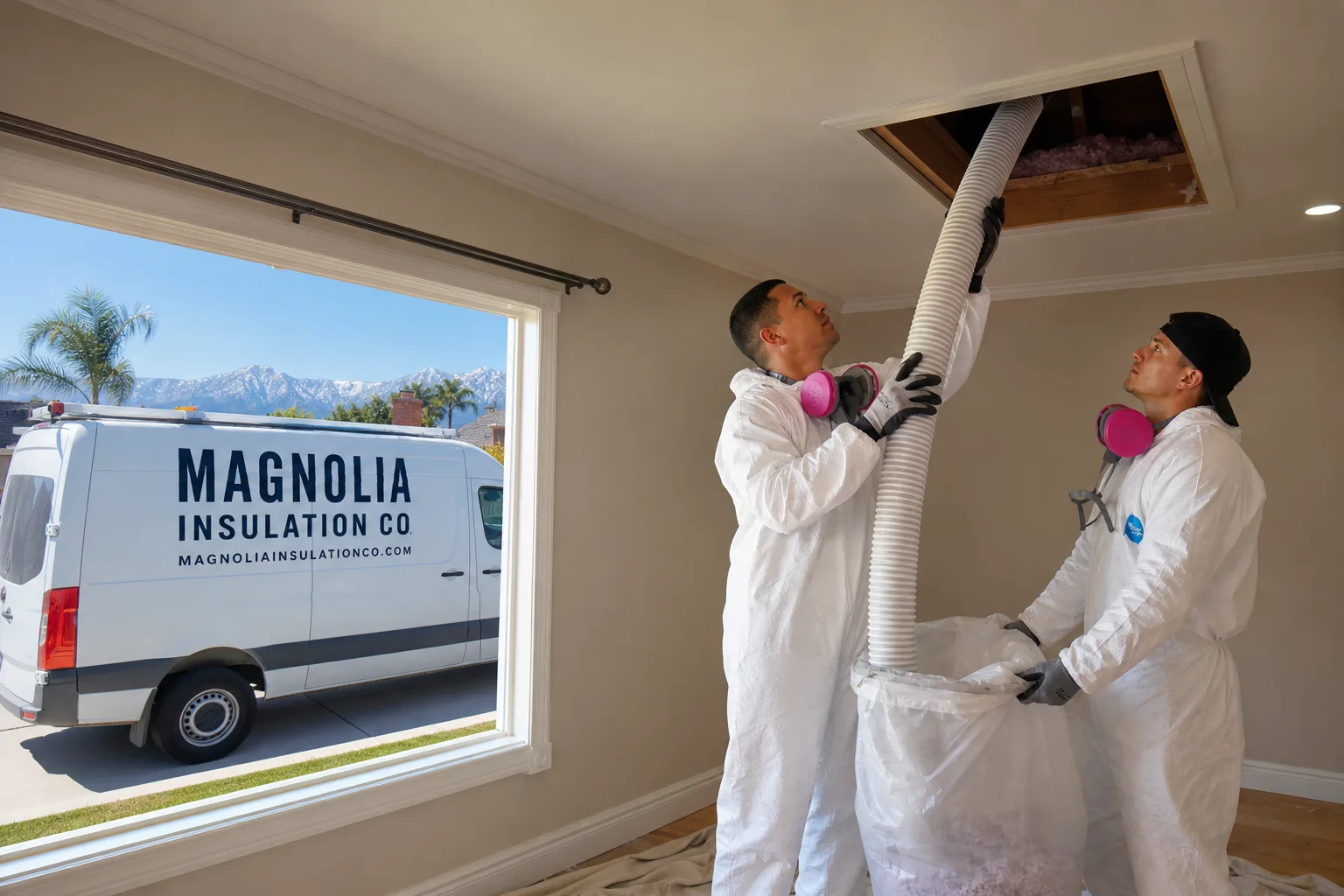
Glen Pacheco founded Magnolia Insulation Co on a simple idea: carry enough brands and installation methods that the recommendation fits the home, not the inventory. We install fiberglass batts, Rockwool mineral wool, spray foam, and GreenFiber cellulose, sourced from eight manufacturers including Owens Corning, Johns Manville, and CertainTeed. That breadth matters in La Verne, where a flat central-valley attic and a foothill-exposed attic can need completely different materials. Glen Pacheco and our techs will walk you through the tradeoffs in plain English, then let you decide.
Attic Ventilation in La Verne
Attic Ventilation in La Verne is the difference between an attic that breathes and an attic that bakes, and on the north side of town, it’s also the difference between insulation that holds its R-value and insulation that gets matted flat by canyon dust within a few years. La Verne’s foothill-edge homes routinely have soffit vents pulling hot, dirty air off the San Gabriel River wash on windy afternoons, which means ventilation prep here isn’t a checkbox. It’s the first thing we address before any new insulation goes in. For most La Verne homes, attic baffles and ventilation prep run $450 to $950, and without it, you’re paying to insulate an attic that will undo the work in three seasons.
Blocked Soffits, Short-Circuited Airflow
Original mid-century batts settle over the decades and slide down against the eaves, covering the soffit vents entirely. When that happens, the ridge vent has nothing to pull from. Hot summer air just sits up there, cooking the roof deck from underneath while the insulation slowly loads with whatever dust does manage to drift in. We baffle every rafter bay before we blow or lay new material, so the intake path stays open.
Dust-Loaded Vents on the Foothill Side
North La Verne attics near the foothills pull fine canyon dust through vent openings on windy afternoons, and that dust settles into the insulation’s top layer. Over time it forms a crust that blocks the air pockets doing the actual insulating. Our crews see this constantly, and it’s why we recommend checking vent screens and adding baffles as part of any attic upgrade this close to the wash.
Radiant Barrier in La Verne
Radiant Barrier in La Verne is one of the highest-leverage upgrades we install in foothill-edge homes, because a foil layer under the roof deck reflects radiant heat before it ever reaches your insulation. La Verne attics hit punishing temperatures in summer, easily 130 to 150 degrees on a hot August afternoon, and a radiant barrier can knock 25 to 35 degrees off that ceiling. Installed together with fresh insulation, a radiant barrier typically runs $1,200 to $2,400 for a standard La Verne ranch, and it pays back fastest on homes with asphalt shingle roofs and limited tree shade.
Why It Works Harder Against the Foothills
The wide day-to-night swing that defines La Verne’s foothill edge means your attic spends hours each day cycling between extreme heat and cooler canyon air. That cycling drives radiative heat into the living space in the late afternoon, right when your AC is already working hardest. A radiant barrier interrupts that transfer at the source, before your insulation even has to fight it.
Pairing Barrier With New Insulation
The smart sequence in an older La Verne home is to air-seal the top plates and can lights, baffle the soffits, then blow in new insulation to depth before adding the radiant barrier under the roof deck. That order matters. A barrier over a dusty, compressed attic just traps the mess, while a properly prepped attic gives you measurable late-afternoon temperature drops within the first week.
Trusted Brands We Service in La Verne
We stock and install materials from Rockwool, CertainTeed, Owens Corning, Johns Manville, Knauf, Icynene, Demilec, and GreenFiber, which means we don’t have to force a single product line onto a La Verne attic that needs something specific. A foothill-exposed attic with dust issues might get Rockwool’s mineral wool for its density and settled-air resistance, while a flat central tract home might do better with GreenFiber blown-in cellulose for coverage and recycled content. We keep common materials local to our Rancho Cucamonga shop, so La Verne jobs don’t wait on shipping. Call (866) 464-1714 and we’ll tell you which material actually fits your house.
Common Attic Insulation Problems We See in La Verne Homes
- Dust-matted mid-century batts. North-side attics near the foothills pull canyon dust off the San Gabriel River wash every windy afternoon, and that dust packs original fiberglass batts down until they look more like carpet pad than insulation. The R-value drops quietly, years before any visible damage shows.
- Blocked soffit vents from settled insulation. Original batts slide and settle against the eaves over decades, sealing off the intake vents and leaving the attic with no airflow. Summer heat builds, shingles age faster, and the living space below never quite cools off.
- Compressed or missing insulation around top plates and can lights. Decades of rewiring, cable pulls, and pest work leave gaps that don’t show up until we get into the attic. These small openings leak conditioned air constantly, and in a 1960s La Verne ranch they add up fast.
- Disturbed insulation from pest activity. Older tract homes in 91750 often have roof rats or squirrels that nest in the attic, trampling and displacing whatever insulation was there. We find torn batts, scattered material, and contaminated zones that need removal before anything new goes in.
Pricing for Attic Insulation in La Verne, CA
A typical attic insulation upgrade in La Verne runs $1,800 to $4,200 for a full job, with smaller top-up work starting around $900 to $1,500. Blown-in cellulose or fiberglass for a standard 1,200-square-foot attic usually falls between $1,800 and $2,800, while Rockwool batts run higher, often $2,500 to $4,000, because of the material cost and the labor to fit them properly. Attic baffles and ventilation prep add $450 to $950, and a radiant barrier adds $1,200 to $2,400 depending on roof geometry. Access problems, like a tight scuttle or a low-pitch roof, push the labor number up. We’ll give you a free, line-item estimate before any work starts, so you know exactly what you’re paying for. Call (866) 464-1714 to schedule a look.
We Also Serve Cities Near La Verne
Our crews cover the entire eastern San Gabriel Valley, including La Verne, Claremont, Pomona, Glendora, and Montclair. If you’re just over the city line, we’re already in the neighborhood most weeks and can usually fit you in within a few days. The same brands, the same prep standards, and the same straight answers apply.
Serving La Verne, CA — Our Local Coverage Area
We’re based in the La Verne area and know this community well. Use the map below to see our service coverage — if you’re nearby, we can almost certainly help.
FAQs About Attic Insulation in La Verne
North La Verne sits up against the foothills and the San Gabriel River wash, so afternoon canyon winds carry fine dust into attics through foothill-side vents. Pomona’s flatter central valley doesn’t get that same wind-driven dust, so insulation there typically fails from compression and age alone. In La Verne, the dust crust on top of old batts is often what really kills the R-value, and the fix is the same either way: remove the old material, air-seal, baffle the soffits, and blow in fresh insulation to proper depth. Call (866) 464-1714 and we’ll tell you exactly what we find in your attic.
Yes, and in La Verne it’s one of the highest-return upgrades you can make. The wide day-to-night swing near the foothills pushes attic temps to 150 degrees in summer, and a radiant barrier takes 25 to 35 degrees off that before your new insulation ever has to work. We recommend doing the barrier at the same time as the insulation, since both jobs share the same attic access and prep work. You’ll pay less doing them together than separately. Call (866) 464-1714 for a combined quote.
It changes how much R-value we recommend and how carefully we prep the vents and air seals. Homes this close to the foothills cycle through bigger temperature swings than flat-valley houses, which means insulation has to handle both peak afternoon heat and cooler canyon air rolling in at night. We often spec a higher R-value for La Verne attics than we would for Pomona or San Dimas, and we’re more aggressive about baffling and dust protection on the north side.
We baffle every rafter bay to keep the intake path open, then we screen and, where needed, use denser material or a dust-resistant top layer that canyon air can’t pack down. On the worst north-side exposures, we may recommend vent covers that block wind-driven debris while still allowing airflow. It’s a La Verne-specific fix that flat-valley attics rarely need. Call (866) 464-1714 and we’ll assess your specific vent setup.
We carry Rockwool mineral wool, CertainTeed and Owens Corning fiberglass, and GreenFiber blown-in cellulose, along with spray foam systems from Icynene and Demilec. The right choice depends on your attic’s dust exposure, vent configuration, and budget. We’ll recommend one over the others for specific reasons, not because it’s what we have in the warehouse. That’s the whole point of carrying eight brands.
Call Magnolia Insulation Co for Attic Insulation in La Verne
If your attic hasn’t been looked at in a decade, it’s time. Whether you’re in a 1960s ranch on the north side dealing with dust-loaded batts or a mid-century tract home near the 210 with original insulation long past its useful life, we’ll tell you straight what’s going on and what it’ll cost to fix. Glen Pacheco and the Magnolia Insulation Co team serve La Verne and the surrounding foothill communities with free estimates and no pressure. Call (866) 464-1714 today and get the right material for your home, installed the right way.
Written by Glen Pacheco, Owner at Magnolia Insulation Co, serving La Verne and the San Gabriel Valley.