Fast, Reliable Attic Insulation Across Crestline
Attic insulation in Crestline runs $1,900 to $4,600 for a typical full removal and re-insulation, and $1,100 to $2,400 for a top-up over settled existing batts. We service the entire 92325 zip code, from Lake Gregory shoreline homes to cabins off Daley Canyon Road, usually within 24 to 48 hours of your call. At roughly 4,500 feet elevation, your attic does not behave like one down in San Bernardino or Highland. Snow-load winters, ember season, and big temperature swings change what belongs up there. Call (866) 464-1714 for a free attic assessment specific to your Crestline home.
Why Magnolia Insulation Co Is Crestline’s Preferred Attic Insulation Company
We spend real time in Crestline because the housing stock here is different. Wood-frame cabins from the 1940s through the 1970s, vaulted ceilings with shallow rafter bays, add-on rooms with open soffits; these are not tract-home attics. Our team, led by Glen Pacheco, has pulled back enough R-13 fiberglass in Crestline to know what lives underneath it: ice dam stains at the eave line, rodent trails through settled batts under stored cabin gear, and blackened insulation edges where ember-laden air moved through soffit gaps. That familiarity means our recommendations for Attic Insulation work are built around your actual ceiling assembly, not a generic R-value chart.
Crestline homeowners regularly tell us the same thing: another contractor quoted them a product, but we asked about their roof, their vents, and their fire-plan first. That is the job. We are a material-agnostic shop with eight brands and three installation methods under one roof, so whether your cabin needs full removal and Rockwool with a fire-rated facing, or a simple cellulose top-up over the east-facing bedrooms, the recommendation fits your house. The right material for your specific home, not the inventory we happen to push this quarter.
Call (866) 464-1714 and Glen or one of our senior techs will walk your attic before quoting anything. Estimates are free.
Attic Insulation Removal in Crestline
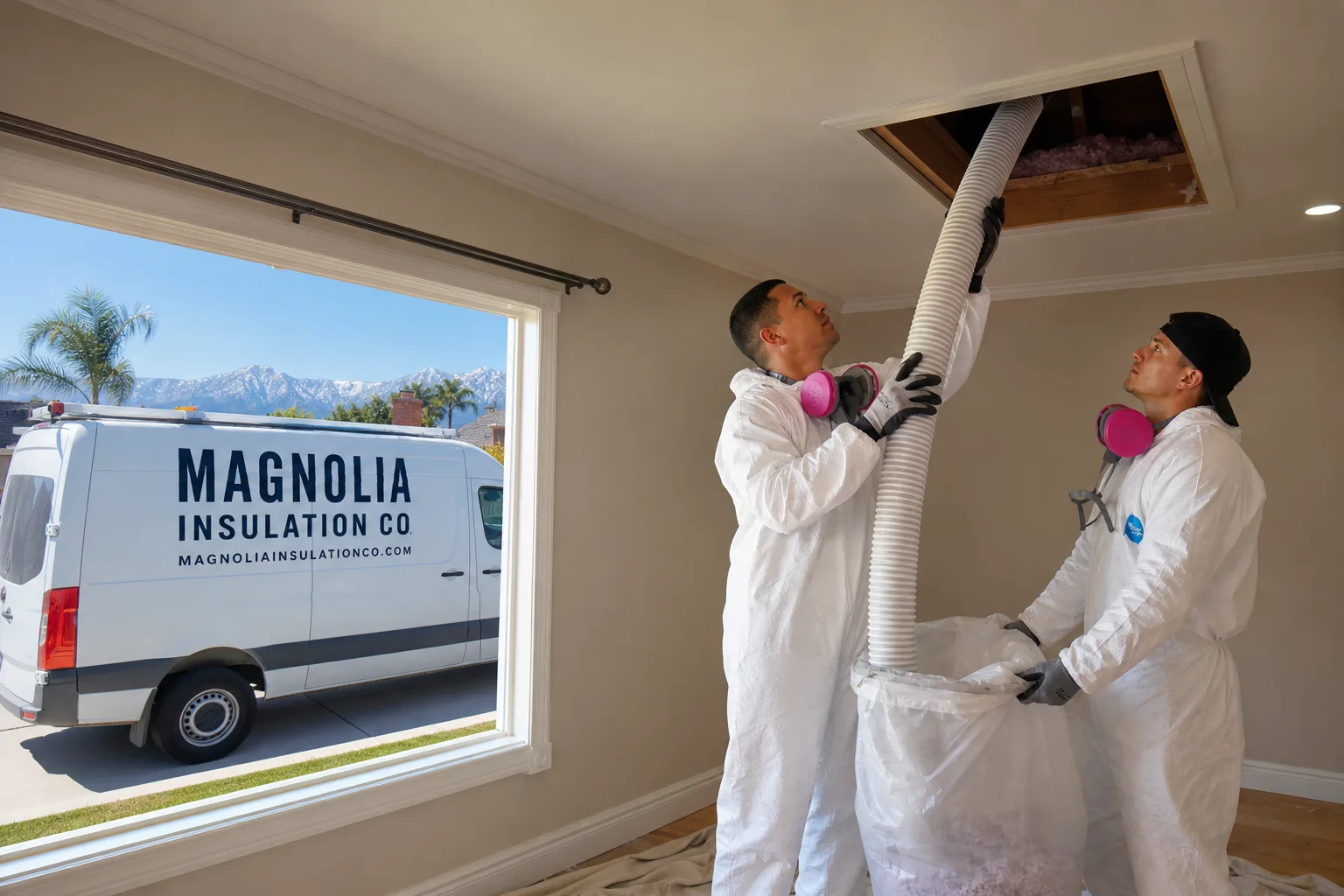
Attic Insulation Removal in Crestline is the step most older cabins have been skipping for decades, and it is usually the reason the “new” insulation underperforms. What it involves: we pull all existing material down to the ceiling drywall or decking, bag it, sanitize the cavity when rodent or moisture evidence is present, air-seal top plates and penetrations, then install new material. In Crestline, removal runs $900 to $1,700 for a typical cabin attic, and is almost always worth doing when your existing batts are compressed, stained, or mixed with decades of stored-gear debris.
Full Removal and Air-Sealing for Older Cabins
Mid-century cabins near Crestline were not built with air barriers. Top plates, wire penetrations, and plumbing chases all leak conditioned air straight into the attic. Before we install anything, we seal those paths. This is the step that stops ice dams from forming in the first place, because warm interior air escaping into the attic is what melts snow on the roof deck, and that meltwater refreezes at the cold eave.
Debris, Rodents, and Compression Repair
Decades of stored gear and rodent activity compress fiberglass until it is barely R-8. We see this in nearly every original Crestline cabin. Removal lets us clear the cavity, treat any contamination, and start fresh with material that actually fills the bay.
Insulation Contractors in Crestline
Insulation Contractors in Crestline need to understand how a mountain attic fails differently than a valley attic. Our crews have worked attics off Lake Gregory Drive, in the San Moritz area, and up through all the switchbacks that make 92325 its own microclimate. We carry the tools and material suited to steep pitch roofs, low-profile access hatches, and vaulted ceiling bays that make many installers walk away. A full attic retrofit in Crestline, including removal, air-sealing, and new insulation, runs $2,800 to $6,200 depending on square footage and access difficulty.
Vaulted Ceilings and Sloped Bay Installation
Crestline’s mid-century cabins and A-frame rooms often leave contractors stumped. The sloped bays are shallow, meaning standard batt thickness will not fit. We use denser, thinner-profile materials where required and install baffles on every bay so the venting path stays clear above the insulation. Skipping that step is what creates the ice-dam cycle in the first place.
Knee Walls and Cantilevered Rooms
Rooms that cantilever out over the hillside have floor assemblies that get hammered by cold air moving underneath in winter. We dense-pack those cavities and seal the rim joists to stop the draft that makes the floor above feel like a meat locker.
Trusted Brands We Service in Crestline
We install Rockwool, CertainTeed, and Demilec spray foam among a broader eight-brand portfolio, and we recommend them by application, not by habit. In Crestline specifically, Rockwool comes up often: it is dense, carries a Class A fire-rated facing option, and does not act as a wick for ember intrusion in the same way loose fiberglass can. CertainTeed batt systems work well in standard joist bays where budget matters more than fire-rating concerns. Demilec closed-cell foam is the choice for vaulted ceilings where we need maximum R-value in a shallow bay. Performance you can measure on your utility bill, and material choices you can defend to your insurer. We keep Crestline-appropriate stock available, so turnaround on most jobs is days, not weeks.
Common Attic Insulation Problems We See in Crestline Homes
- Compressed legacy batts under stored cabin gear. Every summer, the fishing rods and holiday bins go back in, and every year the insulation under them loses more R-value. By the time a Crestline homeowner looks at what is up there, large sections of the top plate are effectively bare, and the energy bill reflects it.
- Ice dams at the eave from unbalanced venting. Ridge and soffit vents on local cabins were rarely sized or positioned for snow-melt winters. Warm attic air melts lower roof snow, meltwater runs to the cold eave, refreezes, and backs up under shingles. The fix is air-sealing plus venting correction, then insulation – in that order.
- Ember-intrusion paths through open soffits and gable gaps. In wooded lots and along Lake Gregory, embers do not need a direct flame to ignite an attic. They need a gap, and the exposed insulation edges that become the fuel. Open fiberglass with no fire-resistant facing is the most common condition we see in old Crestline cabins.
- Shallow vaulted-ceiling bays starved of real insulation. A mid-century A-frame or sloped ceiling room often has nothing but a thin layer of fiberglass compressed into a 2×6 bay. R-value in those rooms can be half of what the adjacent flat ceiling has, which is why one bedroom in the cabin is always cold.
Pricing for Attic Insulation in Crestline, CA
Removal of old material runs $900 to $1,700 for typical cabin attics in the 92325 area. A top-up over settled batts runs $1,100 to $2,400. Full removal, air-sealing, and re-insulation on a standard two- to three-bedroom Crestline home runs $2,800 to $6,200. What moves the number: vaulted ceiling square footage, access difficulty (some older cabins have attic hatches that are barely crawl-through), and whether we are correcting a fire-safety or ice-dam condition rather than just adding R-value. Call (866) 464-1714 for a free estimate with actual measurements, not a per-square-foot guess.
We Also Serve Cities Near Crestline
Our crews cover the wider San Bernardino mountain and valley communities from our shop in Rancho Cucamonga. If you have property in Crestline, Lake Arrowhead, Muscoy, San Bernardino, or Highland, we can usually be there within a day or two. Mountain jobs go to our senior installers who know snow-load and fire-zone requirements, not whoever happens to be available.
Serving Crestline, CA — Our Local Coverage Area
We’re based in the Crestline area and know this community well. Use the map below to see our service coverage — if you’re nearby, we can almost certainly help.
FAQs About Attic Insulation in Crestline
Because at 4,500 feet, snow on your roof melts from the inside first. Warm air leaking from the house into the attic raises the roof deck temperature, melts snow, and the meltwater refreezes at the cold eave. That refrozen dam forces water back under shingles and into the ceiling. Proper air-sealing plus insulation keeps the attic cold enough that the snow stays frozen until outside temperatures melt it naturally. Glen’s crews seal top plates and penetrations on every full retrofit for this exact reason. Call (866) 464-1714 if you see water staining along your ceiling edges.
Yes, and it is not optional. Homes along Lake Gregory Drive and the wooded lots behind Crestline have ember exposure that valley houses do not. Embers enter through soffit gaps and gable vents, and exposed fiberglass becomes ignition fuel. We recommend Rockwool with a Class A fire-rated facing for those attics, and we seal the ember-entry points as part of the install.
Yes, and we do it regularly. Pulling down mid-century batts that have been compressed under stored gear, contaminated with rodent waste, or blackened at the eaves is a standard first step for us in Crestline. Removal typically takes a day, and we bag everything out through the attic hatch. Call (866) 464-1714 and we will look at your attic before quoting anything.
Yes. Shallow rafter bays need denser material and careful baffle installation to maintain venting, but the work is very doable. We use thinner-profile materials like closed-cell spray foam (Demilec) or high-density batts where the bay depth is limited, and we install baffles on every bay so the air path above the insulation stays open. One of our recent jobs near Lake Gregory involved exactly this: vaulted ceiling rooms that had been cold for decades, now holding temperature through a full snow-melt cycle.
If your existing insulation is compressed, stained, or missing across more than about a third of the attic floor, you are better off removing and starting over. A retrofit also lets us air-seal and correct venting, which a top-up never addresses. If the existing material is dry, reasonably intact, and you simply want more R-value, a top-up is fine and costs less. Call (866) 464-1714 for an honest read on which path makes sense for your cabin.
Call Magnolia Insulation Co at (866) 464-1714 for a free attic insulation estimate in Crestline. Glen Pacheco and our team will measure, quote, and never push a product that does not fit your roof, your vents, or your fire plan.
Written by Glen Pacheco, Owner at Magnolia Insulation Co, serving Crestline and the San Bernardino Mountains.