Emergency Attic Insulation Near Me: What Rancho Cucamonga Homeowners Should Do First
If you’re searching “emergency attic insulation near me” in Rancho Cucamonga, the first thing to do is figure out what actually happened. Most “insulation emergencies” fall into one of three buckets: fire or smoke damage, pest or water contamination, or a sudden failure that’s spiking your energy bill. Only one of those three means you should call an insulation contractor first. The other two mean calling someone else before us, and doing it in the wrong order can void your claim or put a crew at risk. Here’s the triage protocol we wish every homeowner had before they dial.
If you’ve already identified the problem and want a pro to look at it, call (866) 464-1714 for a free estimate. Magnolia Insulation Co is the Magnolia Insulation Co home team serving Rancho Cucamonga.
Step One: Identify Which Emergency You Actually Have
Three very different problems get lumped under the same “emergency attic insulation” label, and each one triggers a different first phone call. Take five minutes to identify yours before you call anyone. This is the step most homeowners skip, and it’s the one that costs them money or coverage later.
Scenario A: Fire, Smoke, or Electrical Damage
If there’s been any fire event, even a small one that was quickly contained, do not call an insulation company first. Call your homeowner’s insurance adjuster and a licensed fire-restoration contractor. Smoke odor and soot penetrate insulation deeply, and if you replace the insulation before the damage is documented, your adjuster may have a hard time separating pre-existing condition from event damage. In Rancho Cucamonga, where summer wildfires push smoke into attics even from miles away, we’ve seen homeowners mistake smoke-scented insulation for a fire inside the home. Have a professional assess whether the source was inside the attic or regional smoke intrusion. That distinction matters for your claim.
Scenario B: Rodent Infestation or Water Intrusion
Rodent droppings, urine-soaked batts, raccoon latrines, or a slow roof leak that’s been saturating insulation for months: all of these are biological contamination issues. The first call is a licensed remediation specialist, not an insulation installer. Attic insulation soaked in rodent urine can carry hantavirus, leptospirosis, and salmonella. If you remove contaminated batts without proper containment, you aerosolize those pathogens into your home’s air envelope. A remediation crew removes the contamination under negative air pressure, sanitizes the attic structure, and clears it for new insulation. Then, and only then, do we come in. The order is non-negotiable for your health and for the safety of anyone working in that space.
Scenario C: Pure Insulation Failure
This is the scenario where you call us first. If your energy bill spiked 30% or more with no other changes, if rooms directly under the attic are suddenly hot in summer or cold in winter, or if you’ve discovered the attic insulation has settled to R-10 effectiveness or less, that’s a genuine insulation emergency. This is the one we can walk you through the same day.
For the rest of this guide, we’ll focus on Scenario C, with some timely notes on Scenarios A and B where the first phone call matters most.
Temporary Measures That Actually Help (While You Wait for the Crew)
If you’re in Scenario C and waiting for an insulation appointment, there are a few things you can do today that meaningfully reduce heat intrusion and air exchange without making the eventual job harder or more expensive. The goal here is to limit discomfort, not to fake a fix.
- Seal the attic access hatch. If your attic access is a pull-down stair or a loose plywood panel, a surprising amount of conditioned air leaks into the attic. A $15 roll of weatherstripping around the hatch frame, or a sheet of rigid foam board cut to fit the opening and laid over it, will cut stack-effect airflow immediately. We pulled a panel off a house in the Terra Vista neighborhood of Rancho Cucamonga last summer and the homeowner’s bedroom felt 8 degrees warmer within an hour of sealing the hatch.
- Close any open soffit or gable gaps that are obvious from the outside. Don’t climb up there, but if you can see daylight through a vent hole that shouldn’t be there, a temporary piece of hardware cloth or plywood screwed in from the outside will reduce infiltration.
- Run ceiling fans in reverse. This pulls warm air down from the ceiling in winter, but in a summer heat emergency, reversing the fan pushes air across the ceiling and helps dissipate the radiant heat that’s penetrating the attic floor. It’s not a cure, but it makes rooms more tolerable until the insulation is replaced.
- Don’t stuff fiberglass batts into random gaps. It’s tempting to fill every visible void with a batt, but improperly placed batts create vapor-barrier problems and make air sealing more difficult later. If you must, use unfaced batts and keep them away from chimney flues and recessed light fixtures. Recessed light housings in older Rancho Cucamonga homes can reach high temperatures, and insulation in contact with an unrated housing is a fire risk.
These measures don’t replace proper insulation, but they buy you a couple of days of relative comfort while you schedule a proper assessment. More importantly, they don’t create a mess for the crew to clean up or a hazard to work around.
What Insurance Actually Covers in California for Attic Insulation Damage
This is a question we hear constantly, and the answer is more nuanced than most homeowners expect. In California, standard homeowner’s insurance policies generally cover attic insulation loss when it’s tied to a covered peril: fire, smoke, wind, hail, a sudden pipe burst, or a roof failure caused by one of those events. What policies almost never cover is insulation deterioration from age, settlement, pest activity, or neglect.
Here’s the documentation protocol we recommend in the first 24 hours after you discover the damage:
- Photograph everything. Before anything is touched, photograph the attic from multiple angles, including close-ups of the damaged areas and any visible cause (water staining, nest material, charring). Use a flashlight, not just your phone flash, to capture texture and depth.
- Video a slow walkthrough. A 60-second video with narration while you pan the attic gives the adjuster context photos can’t.
- Preserve a sample. If there’s a section of water-damaged or smoke-damaged insulation that can be removed without contaminating the rest of the house, bag a small sample and label it with the date. Your adjuster may want to see it.
- Don’t remove or replace anything until the adjuster has documented the scene. This is the single biggest mistake we see. Homeowners who rip out damaged insulation the same day often lose their claim because the evidence is gone.
- Ask specifically whether your policy covers “ordinance or law” upgrades. When damage triggers a replacement, many Rancho Cucamonga homes are now required to meet current California Title 24 insulation standards, which may be higher than what was installed when the home was built. Some policies cover the upcharge; most don’t. Know which one you have before you sign a replacement contract.
If you’re not sure whether your attic situation is an insurance matter or a straight replacement, call us at (866) 464-1714. We can walk you through it over the phone, and the estimate is free regardless of whether insurance is involved.
Safety Reality Check: Can You Even Go In That Attic?
Before you climb up there to “take a quick look,” ask yourself whether it’s safe. In Rancho Cucamonga, we have three conditions that are common in attics: extreme heat in summer, rodent activity in foothill-adjacent neighborhoods, and older homes with vermiculite insulation from the 1950s through 1980s that may contain asbestos in trace amounts.
Here’s the plain-English version of our safety protocol.
Safe for a homeowner to assess visually:
- Standing on a ladder and looking into the attic from the access hatch without stepping onto the joists.
- Checking the access hatch area for obvious water staining, daylight penetration, or rat droppings visible from the opening.
- Photographing what you can see from the hatch.
Not safe, and requires professional assessment:
- Walking across attic joists without proper foot placement. A slip puts you through the ceiling drywall, and that’s a trip to the ER that no insulation job is worth.
- Entering any attic with visible rodent droppings, even if you wear a dust mask. A standard paper mask does not filter hantavirus. Proper respiratory protection is a half-face respirator with P100 cartridges, not a hardware-store mask.
- Moving old insulation if the home was built before 1990 and the material appears granular or pebble-like. Vermiculite from the Libby, Montana mine was sold under the Zonolite brand and was installed in attics across Southern California. If you suspect vermiculite, don’t disturb it. Get a licensed asbestos assessor involved before any insulation work begins.
- Working in an attic when the outdoor temperature in Rancho Cucamonga is above 95°F. Attic temperatures can reach 140°F or higher, and heat exhaustion sets in faster than most people realize.
If the damage is visibly extensive, take photos from the hatch and let a professional handle the rest. The cost of a professional assessment is rarely more than the cost of a single medical deductible.
What Same-Day Emergency Insulation Service Can and Can’t Do
We get calls from Rancho Cucamonga homeowners asking for same-day attic insulation, and we want to be straight with you about what that means. Same-day service is sometimes possible, but it comes with constraints that homeowners should understand before pushing for speed.
What’s realistic same day:
- A same-day assessment and air-sealing pass, especially if the problem is limited to specific areas like plumbing chases or the attic hatch.
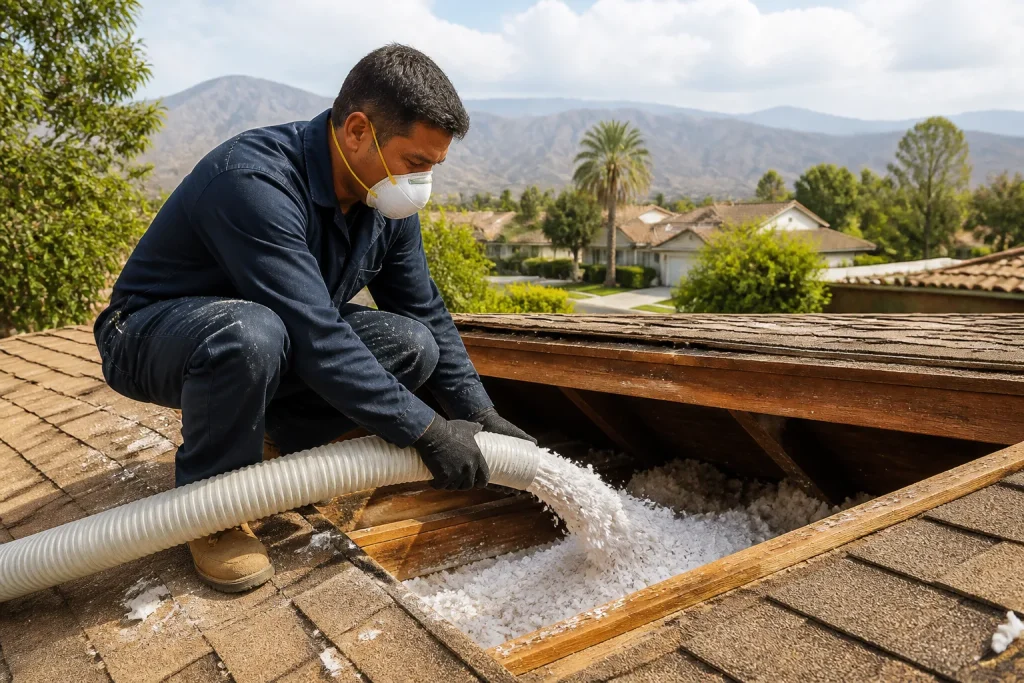
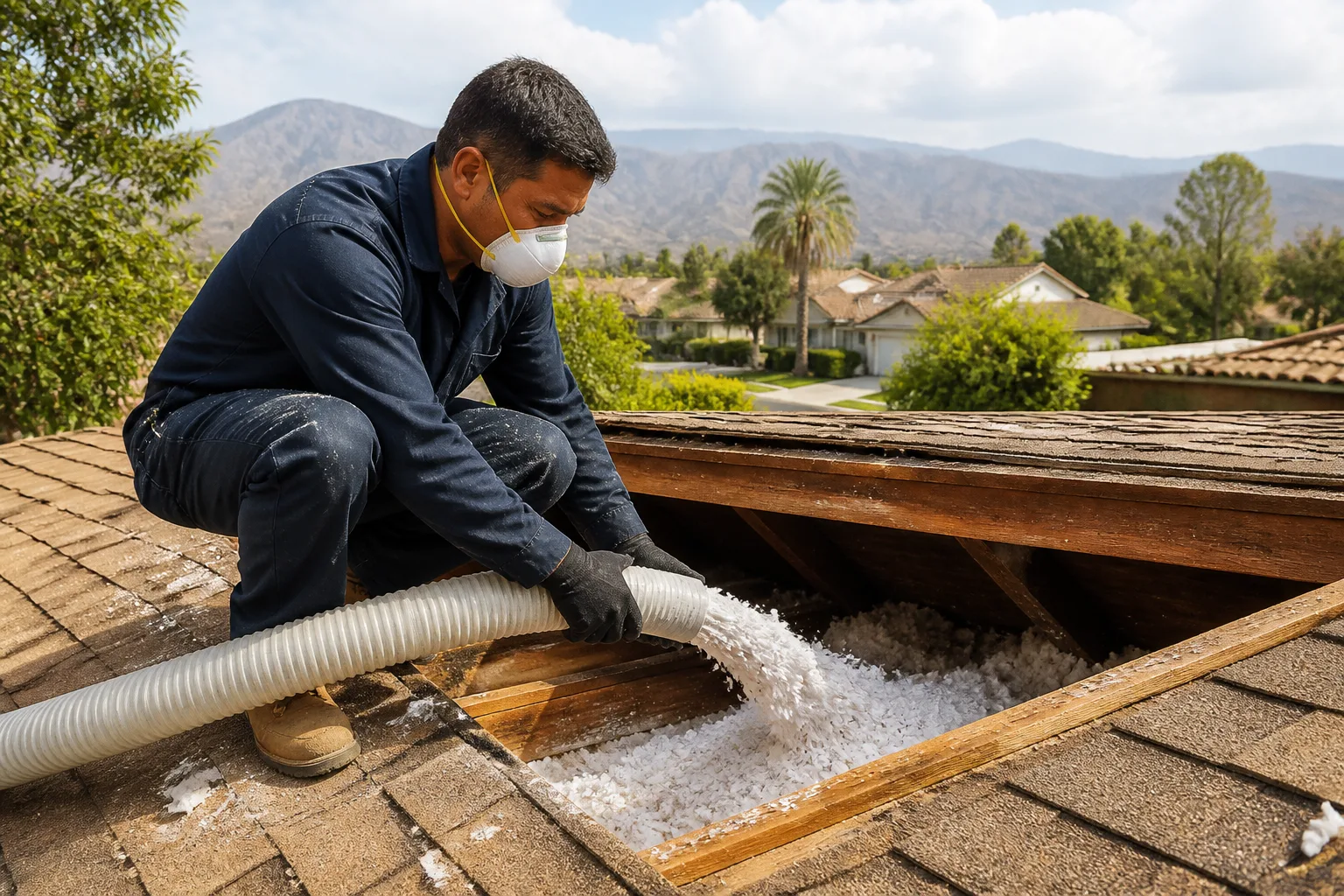
- Blown-in cellulose or fiberglass over existing, dry insulation in an attic that’s already reasonably clean. This is a fairly quick lift-and-fill operation.
- Installing a radiant barrier on the attic floor or underside of the roof deck to slow heat gain while a full replacement is scheduled.
What gets rushed and shouldn’t be:
- Full removal and replacement of contaminated or water-damaged insulation. This requires containment, sanitation, and sometimes drying time. Anything less is a health liability.
- Spray foam installation in a Rancho Cucamonga summer attic. Closed-cell spray foam requires substrate temperatures within a specific range, and rushing it in a 130°F attic means adhesion problems and off-ratio foam that never fully cures. The corner that gets cut is the one that costs you a redo.
- Air sealing pass that covers the obvious gaps but skips the recessed lights, top plates, and plumbing penetrations. That’s the difference between a 20% improvement and the 40% to 50% improvement a thorough job delivers.
Here’s our honest recommendation: if the emergency is a sudden energy spike or a visible hole in the attic floor, call us. We’ll get someone out fast. But if the job requires full removal or foam, wait the extra day or two and let the materials work as designed. The most expensive insulation job we’ve ever seen was the one that got rushed and redone.
For more on what full attic service looks like in Rancho Cucamonga, see our Attic Insulation in Rancho Cucamonga page.
Why Material Choice Matters More in an Emergency
When you’re under pressure to act fast, it’s easy to accept whatever material a contractor happens to have on the truck. But the wrong material in a Rancho Cucamonga attic creates problems you won’t discover until the next heat wave or the next rainy season. We recommend the right product for the application, not for the convenience of the installation schedule. Our eight-brand lineup includes Knauf, Rockwool, CertainTeed, and Icynene, among others, so the recommendation fits the home’s specific structure and the homeowner’s performance goal.
In a fire-damage scenario, Rockwool’s mineral wool is often the right call because it doesn’t burn and doesn’t feed a smolder. In a moisture-prone attic, open-cell foam or properly vented blown-in cellulose handles vapor differently than fiberglass batts. In a hot-attic emergency on a low-slope roof, a Spray Foam Insulation in Rancho Cucamonga approach may be the only way to hit Title 24 performance without ripping out the existing decking. And when a homeowner wants recycled content and solid thermal performance, our Blown In Insulation in Rancho Cucamonga option using GreenFiber cellulose is a strong fit.
The material decision should be made deliberately, even under time pressure. That’s the entire reason we carry multiple brands and multiple installation methods. If the first answer out of a contractor’s mouth is the only product they install, you’re hearing their inventory talking, not their expertise.
The Bottom Line
Most Rancho Cucamonga attic insulation emergencies are milder than they feel in the moment, but a few are genuinely hazardous. The order of operations is simple: figure out whether the source is fire, water, pests, or plain old insulation failure. Document everything before anything is touched. Seal the attic access as a temporary measure if the problem is pure insulation loss. Then call an insulation specialist, not a generalist, to assess the damage and recommend the right material for the specific structure.
If you’re in Rancho Cucamonga or the surrounding Inland Empire and need help, Magnolia Insulation Co offers free estimates and can walk you through the triage process over the phone before you spend a dime. Call (866) 464-1714 and tell us what you’re seeing in the attic. We’ll help you figure out the right first step, even if that step isn’t us.
Frequently Asked Questions
For a typical 1,500 to 2,000 square foot attic in Rancho Cucamonga, full removal and replacement with blown-in cellulose or fiberglass typically runs $2,500 to $6,000 depending on access, contamination level, and the R-value required by current California Title 24 standards. A targeted repair or air-seal-and-top-up job is usually $800 to $2,000. Emergency same-day service may carry a small premium. Call (866) 464-1714 for an exact quote for your attic, and the estimate is free.
If only a small section of insulation is wet from a single, clean roof leak that has been fixed, a targeted removal and replacement is usually cheaper. But if water has been saturating the insulation for weeks, or if mold has started, full removal is almost always the right call, and it’s usually cheaper in the long run than treating a recurring mold problem. Wet fiberglass loses most of its R-value once compressed, and it doesn’t dry back to original performance. We’ll tell you honestly which situation you’re in.
Yes, in many cases we can get a crew out for a same-day assessment and often complete air sealing or blown-in top-up the same day. Full removal or spray foam jobs usually require scheduling a day or two out so surface temperatures and containment protocols are right. Call (866) 464-1714 and we’ll tell you what’s realistic for your specific situation.
No. Rodent, pest, and vermin damage is excluded from nearly all standard California homeowner’s policies, along with gradual water intrusion and simple age-related settlement. The exceptions are sudden and accidental events like a burst pipe or fire, which are generally covered. If you’re unsure whether your situation qualifies, document everything first and contact your adjuster before any work begins. We can help you understand what the adjuster is likely to ask for.
Written by the team at Magnolia Insulation Co, serving Rancho Cucamonga since 2015.
Need Insulation Help?
Call Magnolia Insulation Co — licensed & insured, here with fast after-hours help in Rancho Cucamonga.
(866) 464-1714