
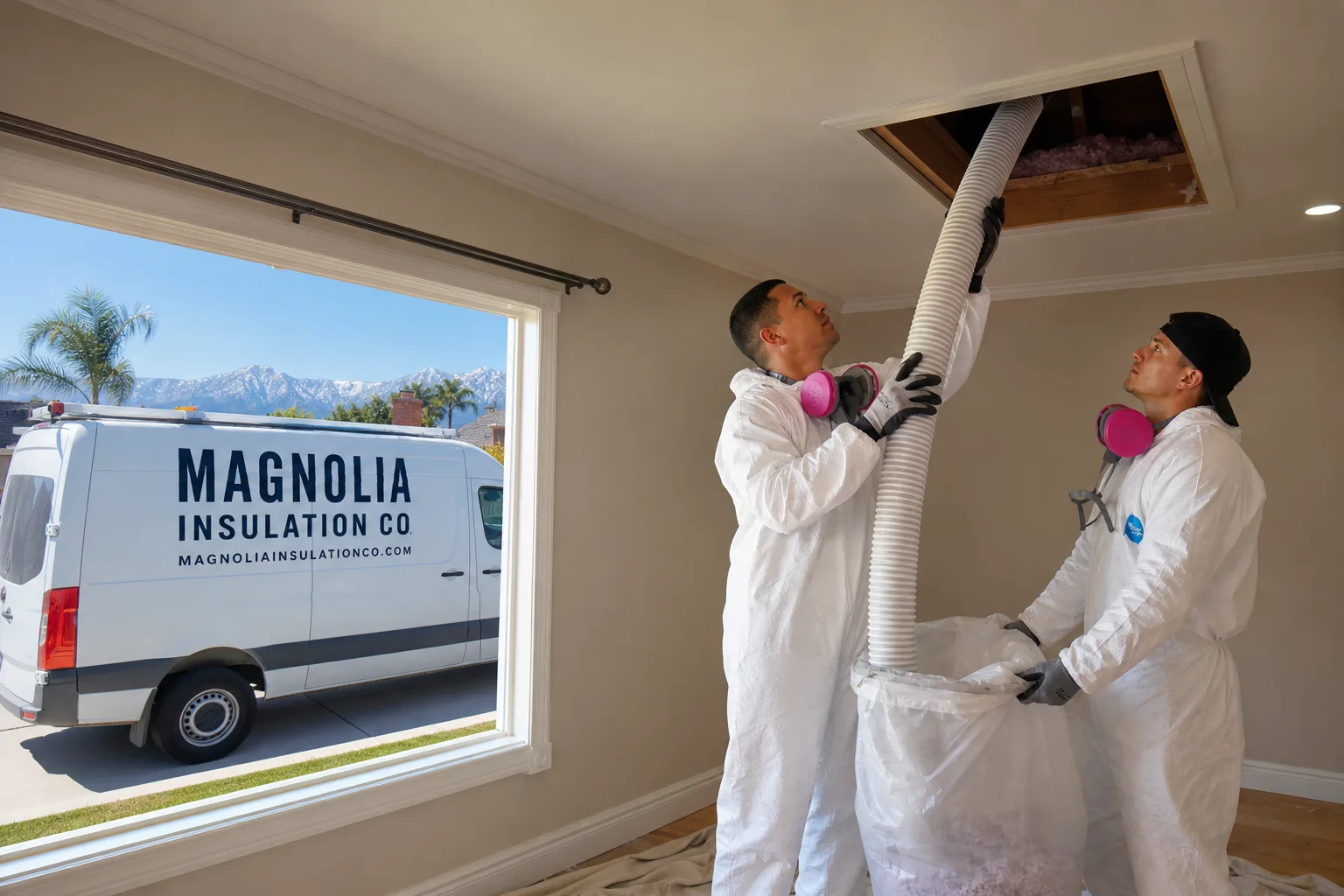
Fast, Reliable Spray Foam Insulation Across Whittier
Spray foam insulation in Whittier typically runs $2.50 to $6.50 per board foot installed, with most whole-attic or rim joist projects landing between $1,800 and $7,200 depending on square footage, cavity depth, and whether we’re sealing a detached workshop on the same trip. We reach Whittier from our Rancho Cucamonga shop within about an hour, and we carry both open-cell and closed-cell foams on every truck, so there’s rarely a second mobilization. If you’ve got a 1920s bungalow near Uptown with plaster walls and no wall insulation, or a 1960s ranch in the southern ZIPs with a hot attic, call (866) 464-1714 and we’ll tell you straight what the job needs.
What makes Whittier different from neighboring cities is the housing stock itself. The pre-war core around Uptown and the older Spanish-style streets has true 2×4 framing with wood lath and plaster. Those cavities are too shallow for standard batts, so the foam goes where it actually pays off: rim joists, crawl spaces, and roof decks. And because Whittier has no alley-loaded garages the way some hillside cities do, the deep-lot homes here often have detached workshops and oversized garage doors that need air-sealing as much as the house does. We plan each visit around getting both done in one trip.
Our Spray Foam Insulation team has run enough jobs across Whittier to know the difference between a 1940s bungalow on a flat lot and a 1970s tract home with stucco and settled fiberglass. That matters when you’re deciding between open-cell and closed-cell foam, and it matters more when the inspector asks about what’s inside the wall before we spray anything.
Why Magnolia Insulation Co Is Whittier’s Preferred Spray Foam Insulation Company
Glen Pacheco built Magnolia Insulation Co around a simple rule: carry the right materials and tell the truth about which one fits the house. That’s why we’re authorized installers for eight brands, including Icynene and Demilec, the two spray foam lines we most often recommend for Whittier’s mix of old and new construction. We don’t push one foam system on every home. A closed-cell Demilec product makes sense for a damp crawl space or a workshop wall. An open-cell Icynene foam is often the better call for a hot attic where you want air-sealing without trapping moisture against the roof deck.
Whittier customers come to us for the same reasons: the house was built before wall insulation was standard, the attic hits 120°F in August, or a previous contractor sprayed foam where it shouldn’t have gone. Our techs know the local building patterns well enough to spot a knob-and-tube wiring issue before the foam gun comes out. We also carry GreenFiber cellulose and Rockwool mineral wool for the cases where spray foam isn’t the right answer at all. That’s the difference between a one-product shop and a company that actually diagnoses first.
Response time to Whittier is usually same-day or next-day for assessments, and we quote over the phone when we can. Estimates are free, and we’ll tell you the square footage math behind the number. No invented urgency, no pressure. Just building-science basics in plain English, and a number you can measure on your next utility bill.
Rim Joist Spray Foam in Whittier
Rim joist spray foam is the single highest-return air-sealing job for most Whittier homes, especially the older core where floor joists meet the foundation with nothing but a thin rim board between the crawl space and the outside air. In a city where summer AC load drives energy demand far more than heating, a sealed rim joist keeps conditioned air where it belongs and blocks the dry, hot air that wants to push through every seam. A typical rim joist job in Whittier runs $900 to $2,400 depending on crawl space access and linear footage.
Open-Cell at the Band
For most Whittier rim joist work, we spray open-cell foam directly against the band board and sill plate. It expands to fill the irregular gaps that older framing always has. On a true 2×4 bungalow, those joints are rarely square, and open-cell is forgiving enough to seal them without pushing against the plaster above.
Closed-Cell Where Moisture Shows
When the crawl space under a Whittier home shows moisture staining or the homeowner wants a vapor barrier in the same pass, we switch to closed-cell foam. It acts as its own vapor retarder and adds structural rigidity to the rim area. This is more common in the southern ZIPs where homes sit lower and soil moisture creeps up in winter.
Crawl Space Spray Foam Insulation in Whittier
Crawl space spray foam insulation in Whittier usually costs $2,000 to $5,500 for a full encapsulation-grade foam pass, depending on access height, square footage, and whether we’re also sealing rim joists at the same time. The older bungalows near Uptown and the Spanish-style homes on the deeper lots often have crawl spaces that are barely 18 inches high. That’s tight work, and it’s exactly what our crews are set up for. Sealing the crawl space floor and walls stops the stack effect that pulls hot air up through the house all summer.
Foam on the Crawl Ceiling
In some Whittier homes, particularly tract-built ranches with vented crawl spaces, we spray the crawl space ceiling rather than the walls. This keeps the floor above warmer in winter and cooler in summer without changing the crawl space’s ventilation character. It’s often the faster, lower-cost option for homes where the crawl space stays dry year-round.
Full Encapsulation on the Deeper Lots
Homeowners on the larger lots in 90602, 90604, 90605, and 90606 often have detached workshops or oversized garages sitting over their own small crawl spaces. We can spray the house crawl and the shop crawl in the same visit, which saves a second mobilization fee and keeps the work consistent across the property.
Trusted Brands We Service in Whittier
Magnolia Insulation Co carries both Icynene and Demilec spray foam systems, which means we can choose between open-cell and closed-cell foam based on what the Whittier job actually needs, not what we happen to have on the truck. For homes where the owner wants an eco-conscious alternative, we also install GreenFiber cellulose, and we keep Owens Corning products in stock for hybrid jobs that combine foam with traditional batts. We do not lock Whittier customers into one manufacturer. Eight brands, one recommendation: the one that fits your specific walls, crawl space, and budget.
Common Spray Foam Insulation Problems We See in Whittier Homes
- Foam sprayed over knob-and-tube wiring. In pre-war bungalows, someone fills the wall cavities without getting the wiring inspected first. Then the job has to be undone, the wiring addressed, and the cavity re-sealed correctly. We check before we spray.
- Heat trapped by unventilated attics. Whittier’s dry 95-105°F summer stretches put real stress on rim joist and attic foam. If the attic isn’t properly baffled and vented before foam goes in, heat and moisture can sit against the roof deck. We check baffling on every Whittier attic job.
- Settled fiberglass under stucco exteriors. Many 1950s-1970s ranch homes in the southern ZIPs have stucco over plaster walls and old batt insulation that’s slumped to the bottom of the cavity. The fix is usually dense-pack cellulose or foam at the rim and crawl, not a full wall tear-out.
- Detached workshops left unsealed. A homeowner gets the house insulated but skips the workshop, then wonders why the power bill didn’t drop enough. We seal the detached workshop door frame and crawl space in the same Whittier visit.
Pricing for Spray Foam Insulation in Whittier, CA
Closed-cell spray foam in Whittier runs $3.00 to $6.50 per board foot installed; open-cell runs $2.50 to $4.50. A whole attic in a 1,200-square-foot home typically lands between $2,800 and $5,200. Rim joist-only work is the most affordable entry point, usually $900 to $2,400, while a full crawl space encapsulation runs $2,000 to $5,500. What moves the number: access height in an older crawl space, whether we’re also doing a detached workshop same-day, and whether there’s knob-and-tube wiring that needs an electrician’s sign-off first. Call (866) 464-1714 for a free estimate with real numbers for your specific Whittier home. We’ll tell you what the foam will do and what it won’t.
We Also Serve Cities Near Whittier
Our crews cover Whittier and the surrounding communities, including South Whittier, West Whittier-Los Nietos, East La Mirada, and Santa Fe Springs. If you’re just outside the core but your house is built the same way, the same rules apply. We run the same trucks, same foam systems, and same one-trip planning across the whole corridor.
Serving Whittier, CA — Our Local Coverage Area
We’re based in the Whittier area and know this community well. Use the map below to see our service coverage — if you’re nearby, we can almost certainly help.
FAQs About Spray Foam Insulation in Whittier
Because many pre-war Whittier bungalows still have knob-and-tube wiring inside the original plaster-on-lath walls, and spraying foam over energized wiring creates a fire and inspection hazard. We won’t fill a cavity until an electrician has cleared the wiring. Call (866) 464-1714 and we’ll tell you whether your home is likely to need that step before we quote.
Yes, and this is one of the most common requests from Whittier homeowners on the deeper lots in the southern ZIPs. We plan the visit so the house and the detached structure are sealed in a single mobilization, which saves you a second trip fee and keeps the foam work consistent. Tell us about the workshop when you call (866) 464-1714 and we’ll include it in the estimate.
Yes, and in fact it makes more sense here than in coastal cities because your AC system is running hard from June through October. Sealing rim joists and crawl spaces keeps the cooled air in the living space, and an open-cell attic pass reduces radiant heat gain through the roof deck. The goal is to cut the AC runtime, and that’s something you’ll see on the bill.
Nothing, because we usually don’t spray into those walls at all. True 2×4 framing with wood lath leaves almost no cavity depth, so foam goes at the rim joist and crawl space while the wall cavities get dense-packed with cellulose if they get anything. This protects the original plaster and avoids over-expansion pressure against the lath.
Yes. The 1950s-1970s ranch homes in 90602, 90604, 90605, and 90606 usually have stucco exteriors and settled fiberglass, so the job is often about sealing the rim and crawl space first, then deciding whether the attic needs a foam pass or a cellulose top-off. The older bungalows near Uptown are more about air-sealing a structure that was never insulated in the walls. Different homes, different foam plan.
If your Whittier house is hot in the summer, cold in the winter, or just costing more to run than it should, call Magnolia Insulation Co at (866) 464-1714. We’ll send a tech who knows what’s behind your walls, what the attic is doing, and what the right material is for your specific home. Free estimates, straight answers, one trip when we can manage it.
Written by Glen Pacheco, Owner at Magnolia Insulation Co, serving Whittier and the surrounding communities.