
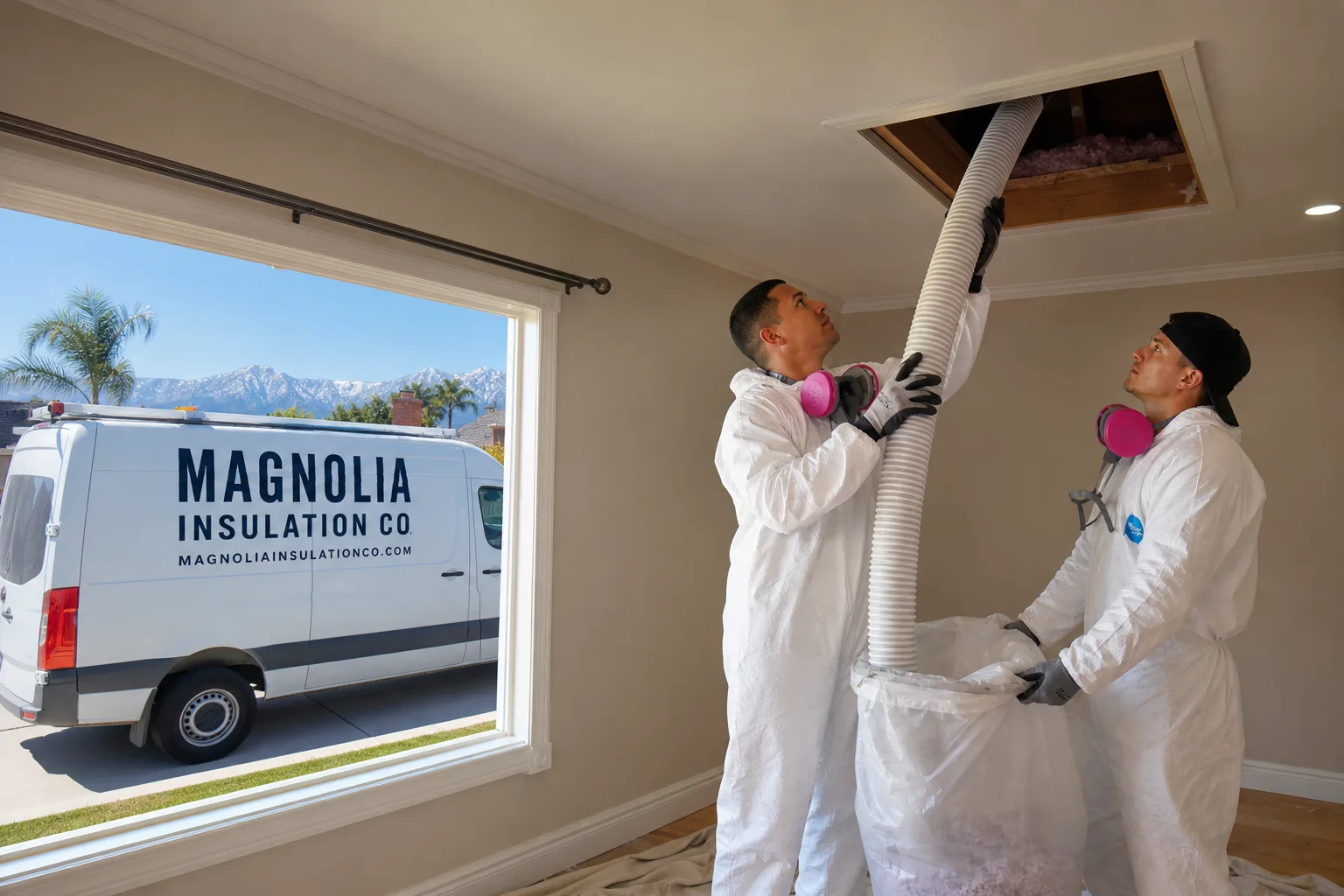
Fast, Reliable Spray Foam Insulation Across Ontario
Spray foam insulation in Ontario, CA typically costs $2,400 to $6,800 for a full attic retrofit, with open-cell foam running $1.10 to $1.90 per board foot and closed-cell at $2.10 to $3.40 per board foot installed. Most Ontario homes we service can be done in one day, with a crew on site by 7 a.m. and out before the afternoon heat really settles in. If you’re watching your upstairs rooms turn into ovens every July afternoon, call (866) 464-1714 and we’ll walk the attic with you.
We know Ontario’s housing stock better than most because we’re in these attics every week. The mid-century ranches off Mountain Avenue, the tract subdivisions near the 60, the newer infill over by Ontario Mills. Each one has its own set of problems, and spray foam is rarely a one-size-fits-all answer. Our Spray Foam Insulation team is material-agnostic: we carry Icynene and Demilec foam systems along with five other major brands, so the recommendation fits your home, not our inventory.
Key Takeaways for Ontario Homeowners
- Cooling is the battle here. Ontario’s triple-digit summer heat makes attic radiant gain the number one comfort problem, not winter heat loss.
- Most Ontario attics are vented and shallow. That changes how foam should be applied. Closed cell sprayed deep into rafter bays without baffles can choke your eaves and make things worse.
- Hybrid retrofits work. Open cell over existing batts on the ceiling plane often beats a full fill in Ontario’s mid-century ranch homes.
- One trip, done right. We plan Ontario jobs around a single visit, including the dry-climate curing check before we leave.
- Estimates are free. Call (866) 464-1714 for a real number, not a ballpark.
Why Magnolia Insulation Co Is Ontario’s Preferred Spray Foam Insulation Company
Ontario sits in the Inland Empire’s western heat corridor, where summer temperatures routinely push past 100°F. Insulation here is a cooling-load problem first and a heating problem second. We’ve spent enough time in Ontario attics to know exactly what that means: the dry, sunny climate keeps attic spaces at 130°F or hotter for months at a stretch, and the city’s huge inventory of 1950s and 60s tract homes, many built before California’s Title 24 insulation requirements tightened, carry original thin batts and unsealed flex duct that let the afternoon heat radiate straight through the ceiling.
Our crews run service calls across Ontario weekly, from the ranch house grids around 91762 and 91764 up to the newer subdivisions in 91761. Homeowners in the older tract neighborhoods around 91762 and 91764 routinely find their original R-7 to R-11 attic batts compressed or fallen away, with leaky flexible duct snaking through a superheated attic. That combination quietly doubles summer cooling costs before anyone notices. We see it so often we can usually identify the problem from the front porch.
We’re an authorized installer for eight nationally recognized insulation brands: Owens Corning, Johns Manville, Knauf, Rockwool, CertainTeed, Icynene, Demilec, and GreenFiber. That matters in Ontario because a 1963 ranch house with vented attic framing needs a different foam than a 2005 stucco two-story with a sealed semi-conditioned attic. Glen Pacheco runs our operations and insists every estimator crawl the attic before quoting. No exceptions.
Open Cell Spray Foam in Ontario
Open Cell Spray Foam is the workhorse for Ontario’s mid-century ranch and tract homes, where vented, shallow wood-frame attics dominate. It’s a lower-density, air-permeable foam that expands to fill bays and seal air leaks while still allowing moisture to move through the assembly. In hot, dry Ontario conditions, open cell makes particular sense for hybrid retrofits: we spray it across the ceiling plane over the original R-7 to R-11 batts, sealing the top of the house against attic heat while keeping the vented attic breathing correctly. A typical open cell attic job in Ontario runs $2,400 to $4,800 depending on square footage and depth.
The Hybrid Retrofit Approach
Many Ontario homes from the 1950s through the 1970s have rafter bays too shallow to hold a full closed-cell build-up without pulling the vents. Foam them solid and you choke the eave vents, turning the attic into a sealed oven. We lay open cell over the existing batts instead: the old fiberglass keeps some conductive value, the foam seals the air leaks, and the attic stays vented like the original framers intended. Done right, it’s the cleanest single-trip fix for ranch homes off the 91762 grid.
Duct Sealing and Attic Ceiling Air Barrier
In Ontario, the ducts live in the attic. That’s not a side note; that’s the whole ballgame. Bare flex duct running through a 130°F attic loses cooling fast. When we spray open cell to the ceiling plane, we also seal the duct boots and plenum penetrations so the hot attic air stops bleeding into the conditioned space. It’s the difference between a foam job that looks good and one that drops your summer utility bill by a measurable amount.
Spray Foam Insulation Contractors in Ontario
Spray Foam Insulation Contractors in Ontario need to understand vented attics, Title 24 retrofit rules, and the specific failure modes of 60-year-old tract housing. We do. Ontario’s summer heat means the clock matters too: foam cures differently in 100°F-plus conditions, and open cell needs a dry-climate off-gassing check before we close the scuttle. A typical spray foam contractor visit in Ontario covers an attic inspection, the foam application, and a post-install verification in one trip, usually 4 to 7 hours on site. Full contractor-installed spray foam projects in Ontario generally run $1,800 to $11,000 depending on scope, with rim joist jobs on the low end and full roof decks on the high end.
What to Check Before You Spray
Before a single pound of foam goes in, we check the attic’s ventilation path. In Ontario’s older subdivisions, eave vents are often buried under old insulation or blocked by decades of leaf debris. Setting baffles first is non-negotiable with closed cell in shallow rafter bays. Skip that step and you get a sealed attic that holds heat worse than it did before, which is a failure we’ve corrected on other contractors’ jobs more times than we like to count.
One Trip, Done Right
We schedule Ontario jobs as single-visit projects whenever the scope allows. That means the estimator has already been in the attic, the materials are staged the night before, and the crew arrives knowing exactly which bays get foam and which stay ventilation channels. For most Ontario tract homes, that’s one morning to one full day. Homeowners with detached workshops or larger custom builds off Euclid Avenue sometimes need a second day, but that’s planned before we start, not discovered halfway through.
On a 1960s ranch off the 91762 tract grid, our crew found the original thin batts compressed to about R-7 with bare flex duct snaking through a 130°F attic. We laid open-cell spray foam across the ceiling plane over the existing batts, sealed the duct boots and plenum penetrations, and kept the vented attic breathing with baffles at the eaves. The homeowner stopped seeing the afternoon ceiling heat push the thermostat around. That’s the job, done the way Ontario’s houses actually need it.
Trusted Brands We Service in Ontario
We spray Icynene and Demilec foam systems, two of the most recognized open- and closed-cell platforms in North America. For Ontario’s hot vented attics, Icynene’s open-cell line is a frequent recommendation because it air-seals well and allows the assembly to breathe. Demilec closed-cell products come into play for rim joists, garage ceiling conversions, and the occasional roof deck in newer Ontario construction. We also carry Rockwool and CertainTeed for hybrid jobs where mineral wool or fiberglass batts pair with the foam. We don’t push one brand; we push the one that fits the structure. And if we need more material on an Ontario job, we’re close enough to restock without losing a day.
Common Spray Foam Insulation Problems We See in Ontario Homes
- Closed cell sprayed deep into shallow rafter bays before baffles are set. This chokes the eave vents and turns the attic into a 130°F oven, making cooling bills worse and sometimes shortening shingle life. We fix this by pulling back the overbuild and re-establishing the ventilation channel before re-spraying properly.
- Foaming over the ceiling plane without sealing older flex duct and plenum boots first. The hot attic leak stays, so the homeowner spends several thousand dollars and sees almost no change in comfort. We always seal ducts and penetrations before or during the foam application.
- Skipping the dry-climate curing check on open cell in a hot vented attic. Ontario’s summer heat can leave foam tacky and off-gassing long after the crew leaves. We verify cure before we close the scuttle, and we tell you what to expect in the first 48 hours.
- Using the wrong foam for the application. Open cell in a rim joist that should be closed cell, closed cell on a ceiling plane that needed to breathe. The material isn’t the problem; the application is. Our crews are trained on both Icynene and Demilec systems and we get the selection right the first time.
Pricing for Spray Foam Insulation in Ontario, CA
Spray foam pricing in Ontario tracks the scope more than the brand. Open cell attic retrofits on a typical 1,200 to 1,800 square foot ranch run $2,400 to $4,800. Closed cell rim joist sealing in an Ontario crawlspace or basement rim runs $1,800 to $3,200 for most homes. Garage ceiling spray foam falls in the $1,500 to $3,000 range depending on whether we’re converting the garage to conditioned space or just air-sealing the shared wall. Full roof deck spray foam, which some Ontario homeowners choose for unvented attic conversions, starts around $6,000 and can reach $11,000 on larger or steeper roofs. What moves the number: attic square footage, existing insulation depth, duct sealing scope, and whether baffles or venting corrections are needed first. Call (866) 464-1714 for a free estimate. We’ll give you a written number, not a guess.
We Also Serve Cities Near Ontario
Our crews run routes through the surrounding Inland Empire communities every week. We cover Montclair, Upland, Chino, and San Antonio Heights with the same one-trip planning and the same material-agnostic approach we bring to Ontario. If you’re a few minutes off the 10 or the 60, you’re still in our service area. Call us and ask; we’re likely already working a street near yours.
Serving Ontario, CA — Our Local Coverage Area
We’re based in the Ontario area and know this community well. Use the map below to see our service coverage — if you’re nearby, we can almost certainly help.
FAQs About Spray Foam Insulation in Ontario
Because your rafter bays are shallow and your attic is vented, so open cell over the existing batts seals the air leaks and radiant gain without blocking the ventilation path your house was designed around. You keep the vented attic working correctly and gain the air-sealing benefit foam provides. In a 91762 ranch with original R-7 batts, that hybrid approach often cuts summer afternoon ceiling heat transfer more effectively than ripping everything out. Call (866) 464-1714 and we’ll tell you what your specific attic needs after we look at it.
Yes, when it’s installed correctly on the right plane. Sealing the ceiling plane with open cell foam blocks the stack effect and radiant drive from a 130°F attic pushing heat into your living space. If the ducts are sealed at the same time, you get compounding savings because the cooled air stays where it belongs. We measure ceiling surface temperatures before and after on most jobs, and the drop is usually immediate and obvious.
Most single-story Ontario tract homes take 4 to 7 hours on site, from arrival to final walkthrough, assuming the estimator has already scoped the attic and the materials are staged. Two-story homes or jobs with significant duct sealing can run 7 to 10 hours, which is still one long day. We don’t make you take multiple days off work for a job that doesn’t need it. Call (866) 464-1714 for a schedule estimate on your specific house.
Usually open cell, because a vented attic needs to breathe and open cell seals air leaks without blocking moisture movement. Closed cell used deep in vented rafter bays can trap heat and moisture in Ontario’s hot, dry climate, especially on the shallow-pitch ranch roofs common around 91764 and 91762. There are cases where closed cell makes sense, rim joists and unvented conversions being two of them. We’ll show you why we’re recommending what we’re recommending, in plain language, after we inspect your attic.
We spray Icynene and Demilec, two of the most technically advanced foam platforms available to professional contractors. It matters because open cell and closed cell from different manufacturers cure differently in Ontario’s 100°F-plus summer conditions. We’ve dialed in our process on both systems in this exact climate. What matters more than the brand is the application, which is exactly why Glen Pacheco insists on attic inspections before every quote.
Written by Glen Pacheco, Owner at Magnolia Insulation Co, serving Ontario and the Inland Empire with material-agnostic insulation since day one.
Ready to fix the attic that’s been cooking your house all summer? Call Magnolia Insulation Co at (866) 464-1714 for a free, no-pressure estimate. We’ll crawl the attic, show you what’s going on, and give you a written price for the fix that fits your Ontario home. Estimates are free, and so is the advice if you decide not to move forward.