
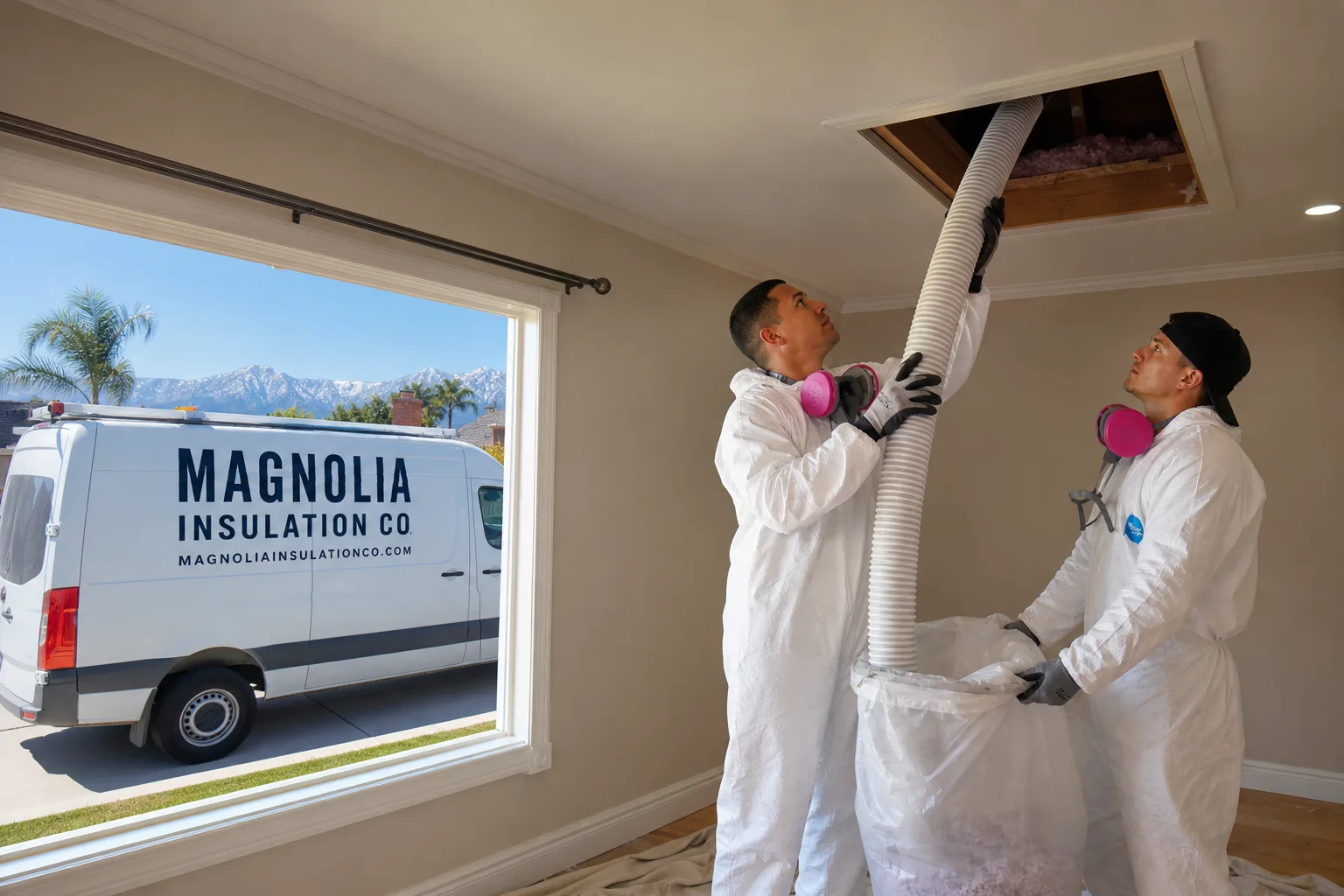
Fast, Reliable Spray Foam Insulation Across Crestline
Spray foam insulation in Crestline typically costs $3.50 to $7.50 per square foot installed, with most whole-home projects in the 92325 zip code landing between $4,800 and $14,000 depending on scope. We run crews up Highway 18 from Rancho Cucamonga to Crestline every week, and we know the mountain roads, the older cabins, and the specific insulation failures that come with living at 4,500 feet. If your utility bills spike every January and your home still feels drafty in July, the problem is rarely your furnace or your windows. It’s the insulation. Call us at (866) 464-1714 and we’ll tell you what’s actually going on in your walls, attic, and crawl space.
Why Magnolia Insulation Co Is Crestline’s Preferred Spray Foam Insulation Company
Crestline homeowners call us because we carry eight insulation brands and we’re not married to any single one. That matters up here. A lakefront cabin near Lake Gregory has different needs than a mid-century A-frame off Lake Drive, and a one-size-fits-all foam recommendation is how you end up with moisture problems or a roof deck that can’t dry properly. Our Spray Foam Insulation team evaluates your specific structure before recommending open-cell or closed-cell foam, and we’ll tell you plainly when spray foam isn’t the right call for a particular cavity.
Glen Pacheco, who leads our crews, has walked through enough Crestline homes to know what’s behind the cedar siding and vaulted ceilings up here. We’ve worked on cabins off Waters Drive, mid-century builds near the lake, and newer construction up toward the forest boundary. When a Crestline homeowner calls, we’re not guessing at the climate. We know the snow load, the afternoon sun exposure on south-facing walls, and which neighborhoods sit in the worst wildfire interface zones.
Response time matters when you’ve got frozen pipes threatening a crawl space or a furnace that can’t keep up with a January cold snap. We schedule Crestline work in consolidated blocks so our installers aren’t burning half a day on the 138. Most estimates happen within 3 to 5 business days, and we carry the foam brands, tools, and blower-door equipment needed to diagnose and correct air leaks in a single visit.
Crawl Space Spray Foam Insulation in Crestline
Crawl Space Spray Foam Insulation in Crestline is the single most effective upgrade for eliminating cold floors, and it’s a job we do constantly because so many mountain cabins sit on uninsulated or poorly sealed crawl spaces. The work involves removing any failed fiberglass that’s sagging or rodent-damaged, sealing the rim joist cavities, and applying closed-cell foam to the foundation walls to create a thermal and moisture barrier. In Crestline, this is not a comfort-only project. The snowmelt that saturates the ground each spring pushes moisture up into open crawl spaces, and that’s how you get warped subfloors, musty smells, and mold growth behind baseboards.
A typical crawl space encapsulation with spray foam in Crestline runs $4,200 to $9,800, depending on square footage, access height, and whether we’re removing old insulation or starting clean. Steep hillside lots with low clearance add labor time, which is common on the lake’s west side where homes step down the slope.
Air Sealing the Rim Joist
The rim joist is where your floor framing meets the foundation, and in Crestline’s older wood-frame homes, it’s usually an unsealed gap that lets cold mountain air pour into the house all winter. We spray closed-cell foam into each joist bay to stop air movement and add structural rigidity. This is the part of the job that makes the biggest difference in how your floors feel on a 20-degree February morning.
Vapor Barrier and Moisture Control
Crestline’s snowy winters mean the ground under your home stays wet for months. Spray foam on the foundation walls, combined with a proper vapor barrier on the floor, stops that moisture from migrating into your living space. We’ve seen homes where the old fiberglass in the crawl space was literally dripping wet and doing nothing but feeding mold. The fix is removal, sealing, and a foam application that won’t absorb water.
Garage Spray Foam Insulation in Crestline
Garage Spray Foam Insulation in Crestline tackles a room that most mountain homeowners overlook until they’re shivering in it. Whether your garage is attached and pulling heat from the house, or detached and serving as a workshop, spray foam on the ceiling and the shared wall with the living space makes an immediate difference. In Crestline, where many homes have minimal attic insulation above the garage or none at all, the heat loss through an uninsulated garage ceiling is substantial.
A garage ceiling and shared-wall foam job in the Crestline area generally runs $1,800 to $4,600, with costs driven by whether we’re doing the full wood deck, just the wall, or adding a rim joist treatment. Detached garages used as workshops sometimes need a full envelope, which pushes toward the higher end.
Garage Ceiling Spray Foam
When a bedroom sits above the garage, the floor of that room is the cold side of the building in winter. Foam applied directly to the garage ceiling underside stops the heat sink effect and keeps the room above noticeably warmer. We use open-cell for most garage ceilings because it handles air sealing well and doesn’t add excess weight to older framing.
Rim Joist Treatment for Attached Garages
An attached garage in Crestline is a major air-leak pathway into the house. The rim joist above the garage foundation is usually open to the outdoors, meaning cold air flows freely between the garage and the floor system above. Sealing those bays with closed-cell foam cuts the draft and keeps the garage from stealing heat from the house all winter.
Trusted Brands We Service in Crestline
We install Icynene and Demilec spray foam systems, and we stock the sealants, detergents, and replacement nozzles to service existing foam installations throughout Crestline. If a previous contractor used a different foam brand and you’ve got settling, gaps, or areas where the foam didn’t cure correctly, we can assess it and often correct it without a full removal. Rockwool mineral wool is on our trucks for Crestline jobs where fire resistance is the primary concern, and CertainTeed products cover situations where fiberglass remains the sensible choice. We bring what the house needs, not what we’re trying to unload.
Glen Pacheco and our installers maintain consistent supply through our Rancho Cucamonga warehouse, which means we’re not waiting on a distributor when a Crestline job starts. We order for your specific project and bring everything up the hill in one trip.
Common Spray Foam Insulation Problems We See in Crestline Homes
- Settled and compressed fiberglass in vaulted ceilings. The 1960s and 1970s cabins around Crestline were built with fiberglass batts jammed into vaulted ceiling cavities, and decades of gravity have pulled them down into a dense, ineffective mat. The result is a ceiling that looks insulated but is actually leaving a cold stripe along the ridge, which is why ice dams form so readily on these roofs.
- Open ember pathways in wood-frame walls. Many Crestline homes sit in wildfire interface zones, and the gaps around wall penetrations, soffits, and gable vents are exactly where embers enter during a fire event. Open-cell spray foam in those cavities blocks the path and gives homeowners a much stronger defense than loose fiberglass ever could.
- Uninsulated crawl spaces feeding frozen-pipe risk. The cabins built on pier foundations or with open crawl space vents lose heat so quickly through the floor that plumbing in those cavities is constantly at risk during Crestline cold snaps. Spray foam on the foundation walls changes the thermal profile of the entire underfloor space.
- Retrofitted insulation without air sealing. We regularly see homes where a previous homeowner or handyman added batts or blown-in material but never sealed the air bypasses first. In a Crestline winter, those unsealed gaps mean the insulation is filtering cold air rather than stopping it. Spray foam is the only retrofit that seals and insulates in a single application.
Pricing for Spray Foam Insulation in Crestline, CA
Here are honest numbers for the Crestline market. Open-cell spray foam runs $1.10 to $1.80 per board foot installed, and closed-cell runs $1.40 to $2.60. A full crawl space encapsulation in Crestline lands between $4,200 and $9,800. Garage ceiling and shared-wall work runs $1,800 to $4,600. A whole-home air sealing and foam package, including rim joists, vaulted ceilings, and crawl space, typically runs $7,500 to $16,000 depending on home size and access difficulty. We give fixed quotes before we start, not estimates that climb. Call (866) 464-1714 and we’ll send someone up to measure and price your specific house. Quotes are free and there’s no obligation to buy.
We Also Serve Cities Near Crestline
Our crews regularly work throughout the San Bernardino Mountains and the nearby foothill communities. We provide Spray Foam Insulation in Crestline as well as service to homeowners in Lake Arrowhead, Muscoy, San Bernardino, and Highland. If you’re in one of these areas, the same crew, the same brands, and the same straight answers apply.
Serving Crestline, CA — Our Local Coverage Area
We’re based in the Crestline area and know this community well. Use the map below to see our service coverage — if you’re nearby, we can almost certainly help.
FAQs About Spray Foam Insulation in Crestline
Spray foam is better than fiberglass for Crestline’s wildfire risk because closed-cell foam creates an air and ember barrier that loose or batt fiberglass cannot. Fiberglass is not an air barrier, and embers can work through gaps around batts and enter wall cavities or soffits. Closed-cell foam, when applied to the rim joist, gable ends, and wall penetrations, physically blocks those ember pathways. This is a real, documented concern for homes in Crestline’s wildfire interface zones, and many insurance carriers look favorably on documented foam air sealing. Call (866) 464-1714 and we’ll walk you through what your specific house needs for fire defense.
Yes, spray foam on the attic floor or roof deck can help with ice dams on Crestline roofs, but the exact application depends on your roof design. Ice dams form when warm air from the living space leaks into the attic, melts the snow on the roof deck, and the meltwater refreezes at the cold eaves. Air sealing the attic floor with spray foam stops the warm air from reaching the roof deck in the first place. For homes with unconditioned attic spaces, that’s the fix. For vaulted ceilings with no attic, the unvented hot-roof approach with closed-cell foam on the underside of the deck is what we recommend.
Spray foam in the crawl space addresses Crestline’s cold floors by insulating the foundation walls and sealing the rim joists so the entire underfloor space stays warmer. When the crawl space is sealed and insulated, the floor above no longer loses heat to the frozen ground and outside air. Homeowners in Crestline typically notice the floor feels warmer within a day or two of the foam curing, and the furnace runs less because it’s not fighting the cold air rising through the floor assembly.
Look for a spray foam contractor in Crestline who carries multiple foam brands, has mountain elevation experience, and gives you a straight answer on whether open-cell or closed-cell is right for your specific application. Ask if they air seal before they insulate. Ask if they understand the moisture dynamics at 4,500 feet, because foam installed incorrectly in a mountain cabin can trap moisture where it shouldn’t be. We carry Icynene and Demilec systems specifically because different homes up here need different foam characteristics, and Glen Pacheco will tell you upfront if spray foam isn’t the right solution for your project.
Yes, spray foam changes how your cabin breathes, and ventilation strategy matters more in Crestline’s older cabins than in new construction. A 1950s cabin was designed to leak air, and when you seal it with foam, you have to account for moisture that used to escape through those leaks. In most Crestline homes, we recommend either mechanical ventilation like a bath fan upgrade or an ERV system, or we design the foam application to leave intentional drying paths in the assembly. This is exactly the kind of detail that separates a correct mountain foam installation from a problem you’ll be fixing in five years. Call (866) 464-1714 and we’ll assess your cabin’s ventilation picture before we ever spray a drop.
If you’re ready to get real about your home’s insulation, call Magnolia Insulation Co at (866) 464-1714 for a free estimate. We’ll drive up from Rancho Cucamonga, look at your specific house, and tell you what it needs. No pressure, no product pushing. Just building science and straight numbers.
Written by Glen Pacheco, Owner at Magnolia Insulation Co, serving Crestline and the San Bernardino Mountains.