Fast, Reliable Attic Insulation Across Running Springs
Attic insulation in Running Springs runs anywhere from $1,800 to $6,500 depending on whether you’re topping up existing material, removing old batts, or starting from scratch in a 1960s cabin with nothing but dust between the rafters. We’re talking real mountain conditions here, not flatland Inland Empire work. At 6,000+ feet, your attic isn’t just about comfort, it’s the front line against snow load, ice dams, and the kind of freeze-thaw moisture that turns small gaps into rot. Magnolia Insulation Co serves all of the 92382 zip code, and our crews know the difference between a Crestline attic and a north-facing Running Springs ridge. Call (866) 464-1714 for a free estimate and we’ll tell you exactly what your roof needs before winter hits.
Why Magnolia Insulation Co Is Running Springs’s Preferred Attic Insulation Company
Running Springs homeowners call us because we treat their attics like a building-science problem, not a sales call. The housing stock up here is unique: older mountain cabins built on pier-and-beam, mid-century second homes with slab-on-grade foundations, and unsealed attics that leak heat during every winter storm. We’ve seen insulation fail here in ways flatland crews never diagnose, and that local knowledge is why we get repeat calls from the same neighborhoods year after year.
Our team at Magnolia Insulation Co stocks materials appropriate for this elevation, which matters more than most people realize. Fiberglass batts behave differently at 6,000 feet with snow sitting on the roof deck. Mineral wool holds its R-value even when moisture gets through. Spray foam air-seals the bypasses that cause ice dams on low-pitch roofs. We carry eight brands, including CertainTeed, Icynene, and GreenFiber, so the recommendation always fits your specific home, not our inventory. Attic Insulation is what we do every day, and in Running Springs it means answering to the weather, not just the building code.
Led by Glen Pacheco, our crews understand that response time matters when a thaw exposes a gap in your insulation. We schedule Running Springs jobs with enough lead time to actually solve the problem before the next freeze, and we show up when we say we will. No chasing, no callbacks, no excuses about the roads. We’re licensed, insured, and bonded, with a reputation built on fixing the things other contractors missed.
Attic Insulation Removal in Running Springs
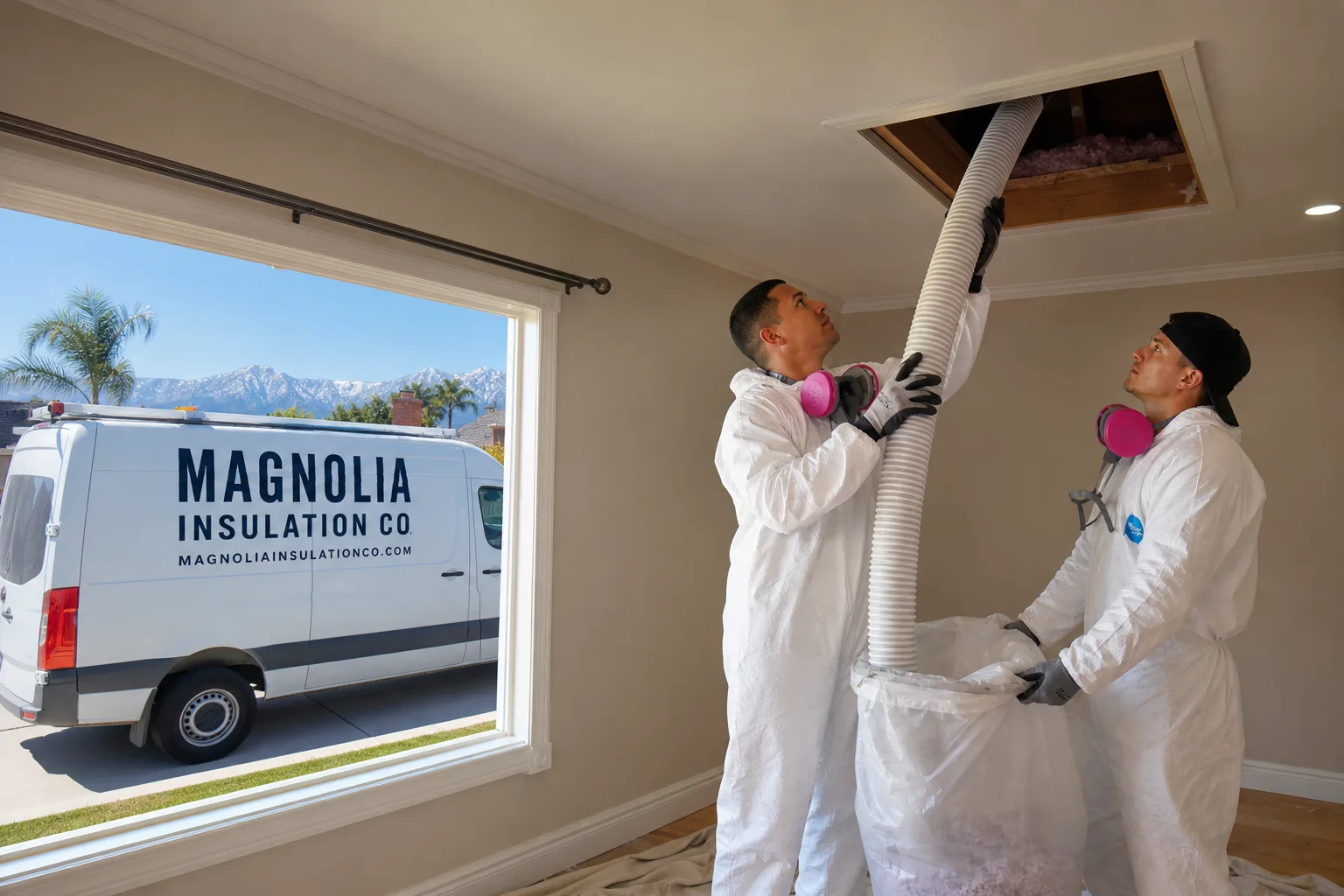
Attic insulation removal in Running Springs is a job we handle regularly in the older cabins and second homes that make up much of the local housing stock. The original fiberglass batts from the 1960s and 1970s have usually slumped, compressed under decades of snow load, or absorbed moisture from freeze-thaw cycles. When insulation gets wet, it stops insulating. Worse, it holds water against your framing and ceiling drywall, feeding mold and rot long after the snow melts. Removal means vacuuming out the old material, inspecting what’s underneath, and prepping the space for fresh insulation that’s sized for mountain weather, not the original builder’s budget. A full removal in Running Springs typically runs $800 to $2,200 depending on attic size and condition. If your attic has been wet or you’re seeing staining on ceilings below, removal isn’t optional, it’s the only way to fix the problem properly.
When to Remove Instead of Top Up
We don’t remove insulation just to sell a bigger job. But here’s the reality in Running Springs: if the old batts are compressed, moldy, or full of rodent droppings, blowing more insulation on top just buries the problem. Snow load on low-pitch roofs compresses insulation over time, and moisture from freeze-thaw wicks through even small gaps, ruining material that looked fine from the hatch. If you can see daylight from the attic, or the insulation sits below the top of the joists, removal and replacement is usually the right call.
The Removal Process on Mountain Homes
Removal starts with sealing off the attic access to keep dust out of your living space. We use commercial vacuums sized for old, settled material, and we bag everything before it leaves the attic. After the old insulation is out, we inspect wiring, check for air leaks at top plates and penetrations, and flag any moisture issues before new material goes in. In Running Springs, that inspection step matters more than the removal itself, because air leaks are what cause ice dams in the first place.
Insulation Contractors in Running Springs
Insulation contractors in Running Springs need to understand mountain construction, not just insulation. Most local homes were built before modern building codes, which means unsealed attics, inadequate venting, and framing details that flatland crews never see. We work on older cabins and mid-century homes throughout the 92382 area, and we approach every job by first asking where the heat is going and where the moisture is coming from. A typical full attic insulation project in Running Springs runs $2,500 to $6,500, with top-ups starting around $1,800. The exact number depends on attic size, access difficulty, and whether air sealing is needed before insulation goes in. If you’re noticing cold floors, high heating bills, or icicles hanging from the eaves, the problem is almost always in the attic, and it’s almost always fixable.
Air Sealing Before Insulation
Insulation slows heat transfer. It doesn’t stop air movement. In Running Springs, warm air leaking through attic bypasses is the number one cause of ice dams and frozen pipes. Before we install any new insulation, we seal the gaps around top plates, plumbing vents, electrical penetrations, and any chase that runs from the living space into the attic. Then insulation does what it’s supposed to do. Skip the air sealing and you’re paying to insulate a leaky bucket.
Retrofit Work on Pier-and-Beam Cabins
Many Running Springs homes sit on pier-and-beam foundations, which means the floor system and crawlspace feed warm air into the attic through wall cavities. We look at the whole path of heat, not just the attic floor. Insulating the attic without addressing the stack effect in an old cabin means the attic stays warm and the roof keeps melting snow. That’s how ice dams form, and it’s why we treat retrofit work as a system, not a single product.
For Running Springs homeowners, we’re the local crew that knows Attic Insulation in Running Springs means working with the mountain, not against it.
Trusted Brands We Service in Running Springs
We’re material-agnostic, which means we carry what works, not what’s cheap. For Running Springs attics, that usually means Owens Corning fiberglass for standard top-ups, mineral wool from Rockwool when moisture resilience or fire resistance matters, and spray foam from Icynene or Demilec for air sealing and maximum R-value per inch. We also install GreenFiber blown-in cellulose for homeowners who want a high-recycled-content option. Eight brands, one recommendation, and the recommendation always fits your home. We stock common materials locally for Running Springs jobs, so we’re not waiting on a truck from down the hill when your attic is exposed and the forecast calls for snow.
Common Attic Insulation Problems We See in Running Springs Homes
- Compressed insulation from snow load. Low-pitch roofs common on Running Springs cabins let snow sit longer, and that weight compresses fiberglass batts over years. We regularly pull out insulation that’s lost half its R-value and looks like a thin blanket instead of a full batt.
- Ice dams at the eaves. Warm air leaks from the living space, melts snow on the roof deck, and the meltwater refreezes at the cold eaves. The result is icicles, water backing up under shingles, and damage that starts in the attic and shows up on ceilings months later.
- Moisture wicking through gaps from freeze-thaw. On north-facing slopes above town, snow lingers for weeks, and the repeated freeze-thaw cycle pushes water into spaces that stay dry at lower elevations. Even small insulation gaps become pathways for moisture that leads to mold and rot in the framing.
- Unsealed attic bypasses in older cabins. Original construction in Running Springs rarely included air sealing. Wiring holes, plumbing chases, and gaps around chimneys let warm interior air pour into the attic all winter, which is why heating bills stay high even after new insulation goes in. Without sealing, the new insulation won’t fix the problem.
Pricing for Attic Insulation in Running Springs, CA
Here’s what you can expect to pay for attic insulation work in Running Springs. A simple top-up of blown-in fiberglass over existing material runs $1,800 to $3,200 for a typical 1,200 to 1,800 square foot attic. Full removal and replacement, including air sealing, runs $4,000 to $6,500. Spray foam jobs start around $3,500 and go up based on square footage and whether you’re foaming the roof deck or the attic floor. Mineral wool batts run $2,800 to $5,000 installed. Every estimate is free, and we give you a firm number before we start, not a vague range. If your attic is accessible and in decent shape, we can usually get you a same-day or next-day quote. Call (866) 464-1714 and we’ll schedule a time that works with the weather.
We Also Serve Cities Near Running Springs
Magnolia Insulation Co runs crews to Lake Arrowhead, Highland, Mentone, and Crestline, along with the surrounding mountain communities. If you’re in the San Bernardino Mountains or just off the hill and need attic insulation, we’re already working in your area and can usually schedule quickly. Whether you’re in Running Springs or a neighboring town, the same crew and the same standards apply.
Serving Running Springs, CA — Our Local Coverage Area
We’re based in the Running Springs area and know this community well. Use the map below to see our service coverage — if you’re nearby, we can almost certainly help.
FAQs About Attic Insulation in Running Springs
Snow sitting on your roof adds weight that compresses insulation beneath it, especially on low-pitch roofs common to older Running Springs cabins. Compressed fiberglass loses R-value because it no longer traps air effectively. Over time, 6 inches of batt can slump to 3 inches of dense, underperforming material. We evaluate snow-load damage during every Running Springs attic inspection and recommend resilient materials, like blown-in fiberglass or mineral wool, that hold their loft better than batt under repeated mountain snow seasons. Call (866) 464-1714 for an exact assessment, estimates are free.
Because the original insulation is often wet, moldy, compressed, or contaminated, and adding new insulation on top seals those problems into your attic. Older cabins in Running Springs were built with minimal insulation and no air sealing, so decades of mountain weather have usually left the material compromised. Removal is the only way to inspect the attic floor, fix air leaks, and start with a clean surface. Ranges for removal run $800 to $2,200 depending on attic size. Call (866) 464-1714 for a free assessment.
Mineral wool and closed-cell spray foam handle moisture best in freeze-thaw conditions. Mineral wool, like Rockwool from our eight-brand portfolio, resists water absorption and retains R-value even when damp, which matters in attics where small leaks happen every winter. Closed-cell spray foam from Icynene or Demilec air-seals completely and acts as a moisture barrier. Blown-in fiberglass works well too if air sealing is done first. The right choice depends on your specific roof and attic, not a one-size-fits-all answer.
Insulation alone won’t prevent ice dams, but insulation plus air sealing will dramatically reduce them. Ice dams form when warm interior air leaks into the attic, warms the roof deck, and melts snow that refreezes at the cold eaves. Sealing those air leaks and adding adequate insulation keeps the roof deck cold, so snow stays frozen instead of melting and refreezing. We air-seal top plates, chases, and penetrations before installing new insulation, and that combination is what actually prevents ice dams.
Yes, we remove and replace all legacy insulation materials found in Running Springs homes, including old fiberglass batts, rock wool, vermiculite, and even sawdust or newspaper insulation occasionally found in pre-1960 cabins. We don’t service or top up old material that’s compromised, we remove it and install modern insulation appropriate for mountain conditions. If we encounter vermiculite that may contain asbestos, we stop work and recommend a certified abatement specialist before proceeding, safety first.
Written by Glen Pacheco, Owner at Magnolia Insulation Co, serving Running Springs and the San Bernardino Mountains.
Ready for an attic that holds heat when it’s 20 degrees outside? Call Magnolia Insulation Co at (866) 464-1714 for a free estimate and a recommendation built for Running Springs weather, not the Inland Empire. We’ll come up the hill, inspect your attic, and tell you exactly what needs to happen, with a firm price before any work begins.