Fast, Reliable Attic Insulation Across Covina
Attic insulation in Covina typically runs $1,800 to $4,200 for a full removal-and-reinstall on a 1,200 to 1,800 square foot home, and most jobs are completed in one day. That range accounts for what we see most often in the 91722, 91723, and 91724 ZIP codes: aging tract homes with settled, contaminated insulation that needs to come out before anything new goes in. If you’re calling from Covina, we can usually have a crew at your door within 24 to 48 hours. Call (866) 464-1714 for a free estimate, and we’ll walk your attic with you before we quote a dollar figure.
Why Magnolia Insulation Co Is Covina’s Preferred Attic Insulation Company
We’re not a franchise dispatch center. Magnolia Insulation Co is led by Glen Pacheco, and when Covina homeowners call us, they get a real specialist who knows what a 1960s tract attic off Cypress Street looks like from the inside. We’ve worked homes near Charter Oak Park, up by the 10 freeway in 91723, and throughout the older subdivisions that define Covina’s housing stock. That local familiarity matters because Covina attics fail in predictable ways. Original R-11 batts settle, rodents move in, and air leaks at top plates quietly erase whatever insulation is left. Homeowners who’ve called us from Covina consistently mention two things: we explain the problem before we propose a fix, and we don’t push material we wouldn’t put in our own attics.
Our crews arrive with eight brands on the truck manifest and no quota on any of them. That lets us match the material to the house. A tight attic with recessed lights near Covina High School gets a different treatment than a wide-open truss attic in 91724. Response time to Covina is typically next-day for estimates and under a week for installation, depending on the season. We carry what Covina’s older homes actually need: removal equipment, air-sealing materials, and fresh insulation rated for San Gabriel Valley heat. No subcontracted labor. No mystery crews.
Attic Mold Removal in Covina
Attic mold removal in Covina is a common add-on to our insulation retrofits, particularly in older bungalows near downtown where decades of bathroom exhaust fans venting into the attic have created chronic moisture problems. In a hot, dry valley like Covina, mold doesn’t usually come from rainfall. It comes from interior moisture hitting a hot, poorly ventilated attic, condensing on the underside of the roof sheathing, and feeding fungal growth year after year. When we pull old insulation and find mold on the decking or rafters, the removal has to happen before any new insulation touches the space. Otherwise you’re sealing a problem under a fresh layer of material.
Mold removal in a Covina attic typically adds $800 to $2,500 to the project, depending on how much surface area is affected and whether the sheathing needs replacement. We use EPA-registered antimicrobial treatments and HEPA filtration during removal, not a coat of paint that hides the problem for a season.
When Removal Becomes Necessary
If you can see dark staining on roof sheathing or smell a musty odor when you open the attic hatch, schedule an inspection. Mold left under fresh insulation continues to spread, and most Covina homes with original 1950s and 1960s venting simply don’t dry out on their own.
How We Handle Contaminated Material
We bag and remove mold-affected insulation and wipe down affected framing before air-sealing and installing new material. The goal is not cosmetic. It’s a clean surface, verified dry, so your new insulation performs and your indoor air doesn’t carry the attic’s problem into the living space.
Attic Insulation Removal in Covina
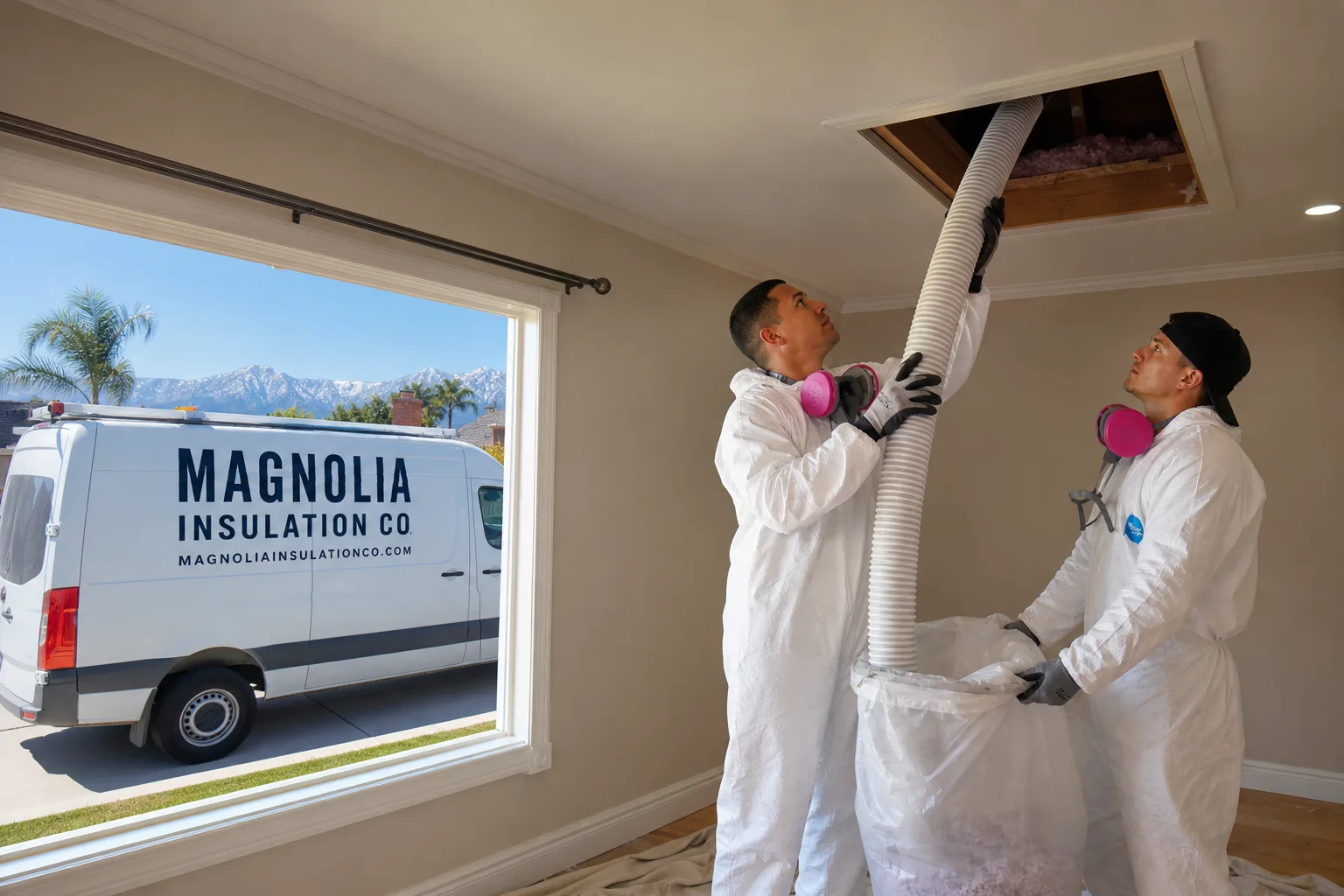
Attic insulation removal in Covina is not an upsell. In the tract homes built between 1950 and 1975 across 91722 and 91724, it’s often the only honest starting point. Original batts rated R-11 have settled to R-6 or worse. Loose-fill has been tunneled through by rodents. The material is compressed, contaminated, and thermally dead. You cannot top-up what has already failed. The old stuff has to come out, the attic floor has to be sealed, and only then do we install new insulation.
Removal alone in Covina typically runs $1 to $2 per square foot, so a 1,200-square-foot attic runs roughly $1,200 to $2,400 before new insulation is installed. The full removal-and-reinstall package, including air-sealing and disposal, usually lands between $2,200 and $4,500 for typical Covina homes depending on access, contamination level, and the new material you choose.
Why Top-Ups Fail in Older Covina Homes
Adding fresh fiberglass over contaminated or compressed material doesn’t restore R-value. The thermal gaps remain, the rodent waste stays in place, and the new insulation simply settles into the same dead zones that formed over the past 50 years. Removal is the only way to reset the attic’s thermal boundary.
The Air-Sealing Step Most Contractors Skip
In Covina’s older homes, air leaks at top plates, recessed lights, and duct boots allow 140°F attic air to pour into the house even after new insulation is installed. We seal those penetrations before we install. It’s the difference between an attic that holds heat out and one that just looks insulated.
Trusted Brands We Service in Covina
We install materials from Rockwool, CertainTeed, Icynene, and Demilec, among others, and we stock the most common replacement components Covina attics need so we’re not waiting on a supplier when your attic is open. A mineral wool job in a Covina bungalow gets Rockwool batts cut to fit odd rafter spacing. A cathedral ceiling gets Demilec open-cell foam. A standard tract attic gets CertainTeed blown-in fiberglass or cellulose. Eight brands, one recommendation, every time.
Common Attic Insulation Problems We See in Covina Homes
- Settled R-11 batts in 1950s-60s tract homes. After 50 to 60 years, original fiberglass batts compress and lose roughly half their rated R-value. That means an attic that should be R-11 is performing closer to R-6, and heat radiates straight through the ceiling on summer afternoons.
- Rodent contamination in 91722 and 91724 attics. Squirrels and rats nest in old loose-fill, leaving droppings, tunnels, and urine-soaked material. A simple top-up seals that hazard under new insulation rather than removing it.
- Missing or degraded air-sealing. Recessed lights, top plates, and duct boots leak air even when insulation is fresh. In Covina, where attic temps routinely exceed 140°F, those leaks let superheated air pour into living spaces and gut your cooling performance.
- Undersized or blocked attic ventilation. Many Covina tract homes have gable vents or soffit vents that are partially blocked by old insulation or just not enough for the attic volume. Trapped heat shortens shingle life and makes whatever insulation you have work harder.
Pricing for Attic Insulation in Covina, CA
Here’s what we charge in Covina, straight. Attic insulation removal alone: $1 to $2 per square foot. New blown-in fiberglass or cellulose for a 1,200-1,800 square foot attic: $1,800 to $3,400. Full removal, air-sealing, and new insulation: $2,200 to $4,500. Spray foam, which some Covina homeowners choose for cathedral ceilings or rooms over garages: $3,800 to $7,500 depending on thickness and area. Mold remediation adds $800 to $2,500. The biggest cost drivers are attic access, contamination level, and whether ductwork or recessed lights need sealing attention. Estimates are free, and Glen Pacheco’s crew gives you a line-item quote before any work begins. Call (866) 464-1714 and we’ll schedule a walk-through.
We Also Serve Cities Near Covina
Beyond Covina, our crews regularly work in Irwindale, Azusa, Citrus, and West Covina. Many of those homes share the same mid-century tract construction and the same failing original insulation. Our Attic Insulation team covers the whole San Gabriel Valley corridor from Rancho Cucamonga west.
Serving Covina, CA — Our Local Coverage Area
We’re based in the Covina area and know this community well. Use the map below to see our service coverage — if you’re nearby, we can almost certainly help.
FAQs About Attic Insulation in Covina
Yes, if your home was built before roughly 1980 and still carries original insulation, removal is almost always the right call. Settled, compressed, or rodent-contaminated material can’t be revived by adding more on top. You’re better off starting clean, sealing the attic floor, and installing material that actually performs. Call (866) 464-1714 and we’ll inspect your attic and tell you honestly whether removal is necessary for your specific house.
For Covina’s hot San Gabriel Valley summers, we recommend R-38 to R-49 in vented attics. The California Energy Commission’s Title 24 zones place Covina in a cooling-dominated climate, so attic insulation is doing most of its work during summer afternoons when attic temperatures exceed 140°F. R-38 is the practical minimum for older tract homes; R-49 is worth considering if you’re replacing everything anyway.
Look for droppings, urine stains, tunnels through loose-fill, or compressed batts with nesting hollows. If you see those signs in a Covina attic, assume the insulation’s thermal performance is compromised and that a top-up will only bury the contamination. We see this constantly in 91722 and 91724. Call (866) 464-1714 for a free inspection, especially if you’ve heard scratching at night.
Yes. When we pull old insulation and find mold on the sheathing or framing, we can treat and remove it before installing new insulation. This is more common in Covina’s older bungalows near downtown where bathroom fans and poor attic ventilation have created chronic moisture problems. Expect $800 to $2,500 added to the project depending on scope.
Because Covina’s attic temperatures exceed 140°F in summer, and every unsealed gap at a top plate, recessed light, or duct boot is a direct pipe for that heat into your living space. Air-sealing is the difference between installing new insulation that works and installing new insulation that only looks good. We include it in every removal-and-reinstall we do in Covina.
Written by Glen Pacheco, Owner at Magnolia Insulation Co, serving Covina and the San Gabriel Valley.